
Dialogue with Zeroth Founder Guo Renjie: Embodied Intelligence Entering the Household is an Infinite Game

Witnessing the deep thinking of 100 founders
refining global business insights for the next decade.
The CES show in early 2026 could be described as a carnival for embodied intelligence. Countless flashbulbs focused on those "humanoid robots" whose size approached that of a real person and could even perform backflips. Under the grand narratives of Silicon Valley mavericks like Musk, public expectations were infinitely raised, as if the next machine overlord capable of perfectly replacing human labor was about to enter millions of households at any moment.
However, thousands of miles away from this clamor in Suzhou, China, Guo Renjie (Founder & CEO of Zeroth) showed Liu Chen (CEO of Mates Academy) a small humanoid robot named Z-bot, only 50 centimeters tall, which could even be jokingly called a "toy" by outsiders. "Our little robot isn't even feared by cats; a cat could even pin it down; and if it falls over, it can get back up by itself," Guo Renjie joked with a smile.
This inevitably raises questions: In this trend where everyone wants to create the "perfect human substitute," why did he choose to start with a little guy that could be called a "toy"?
Understanding his past makes this question even more intense. He once accompanied Dreame in its leap from tens of millions to 6 billion RMB in scale, becoming the Executive President of its China region at the age of 26. As a battle-hardened practitioner who fought in the brutal red ocean, he is an operator extremely adept at delivering results. He used rigorous endgame management systems to avoid mistakes, crushed competitors with relentless high-frequency A/B testing, and deeply understood the competitive philosophy of winning "finite games" in certain tracks.
After leaving Dreame in 2024, he plunged headfirst into entrepreneurship in embodied intelligent robotics. But this time, he pierced through the anxiety surrounding AI technology, adopting a pragmatic stance, starting from the most unsexy yet most real household pain points, attempting to design a new "infinite game" centered on continuously creating value in home scenarios.
The company he founded, Suzhou LeXiang Intelligent Technology Co., Ltd., completed three rounds of financing within nine months after its official establishment in December 2024, delivering impressive results by December 30, 2025: securing the first 100-million-level consumer-grade embodied intelligence order while achieving tens of millions in revenue. On this foundation, it launched the new brand "Zeroth".
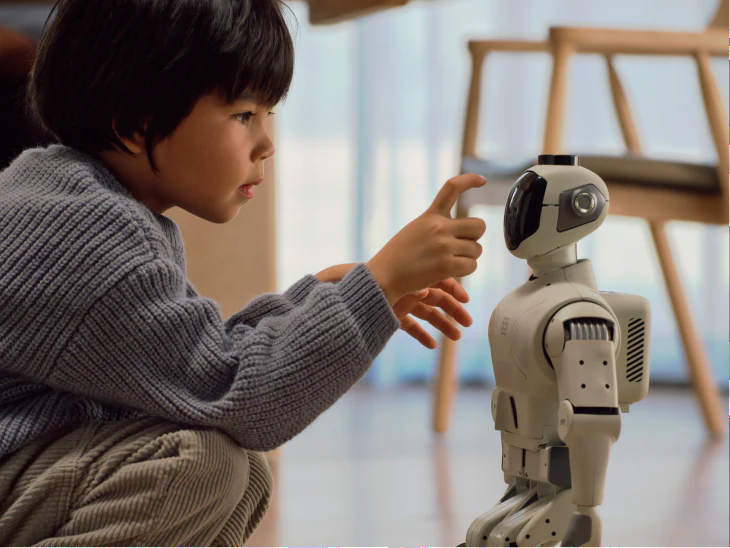
Z-Bot

In today's venture capital circles, discussing robots seems to inevitably involve "bipedal walking" and "dexterous hands." But in Guo Renjie's view, this worship of "human-like form" conceals the most fundamental flaws in the commercial logic of household robots.
He sharply points out two vicious cycles currently facing humanoid robots: the "Safety Fear Paradox" and the "Efficiency Paradox."
In a home setting, if a robot cannot perform tasks, it is worthless. But if it possesses the ability to handle a knife for chopping vegetables, it physically gains the same capacity to harm humans. For families with pets and children, placing a "person" with simulated limbs in the home inherently violates humanity's most primal sense of security baseline, especially when AI is not yet fully controllable. Moreover, in industrial scenarios pursuing ultimate efficiency, the full-body power for bipedal walking and 360-degree joint rotation is often redundant. A wheeled chassis paired with two robotic arms is far more efficient than walking on two legs and is cheaper.
So, if they are not building the "perfect dummy," what is Zeroth building?
Guo Renjie's answer is: In physical form, creating a pragmatic mobile terminal; but in spiritual interaction, creating a "person" that serves the family well.
He perfectly transferred the core experience of technology diffusion from the past robotic vacuum cleaner industry to breaking the deadlock in embodied intelligence. He believes that at the current level of engineering, the technology that can truly bring a hundredfold improvement in experience is the mobility capability based on L2 autonomous driving solutions (LiDAR SLAM).
Therefore, when Zeroth first launched the W-bot, it chose the most pragmatic "wheeled and tracked" chassis approach. The subsequently launched Z-bot adopted a combination of a chassis and a "legged" robot. This way, in home environments, especially for patrol scenarios like monitoring elderly falls, the speed, silence, and absolute stability of wheeled systems offer an experience that legged systems can hardly match.
Guo Renjie further explains: "In the past, to control all home devices, you had to walk over and shout at a speaker; to take photos of children or pets, you had to squat on the ground with your phone. Today, as long as we achieve whole-home coverage mobility, all fixed hardware can be redefined. It can be a mobile small speaker, a mobile surveillance camera, a mobile alarm clock, or a whole-home mobile life reminder assistant."
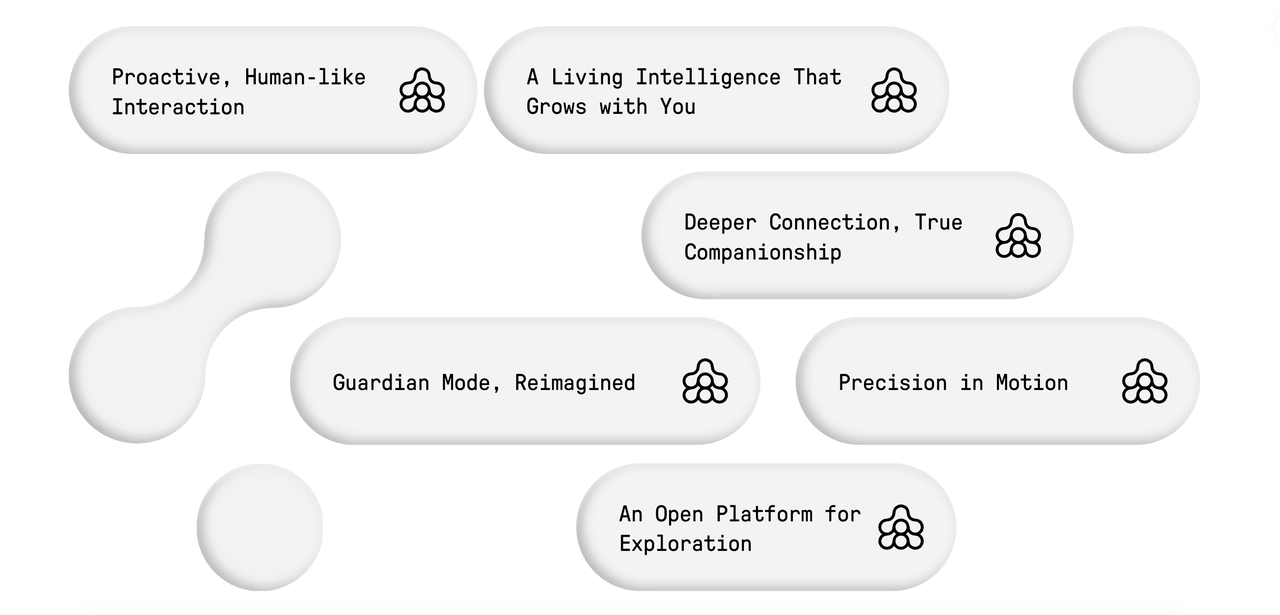
The Zeroth team discovered that purely digital AI (like ChatGPT or Doubao) is essentially a passive response tool. Its biggest interaction barrier is that when users face a screen, they often don't know what topic to bring up to start a conversation. The greatest advantage of physical AI lies in its ability to break the passive mode of human-asking-machine-answering through the combination of perception and large models. It is no longer a programmed tool of the past where "I say something, you move once," but is endowed with a "soul" that actively intervenes in family interactions.
For example, when the robot notices an elderly person living alone sitting bored on the sofa, it will proactively approach and ask, "How did you feel on the day your daughter was born?" to guide the elderly person into reminiscing, subtly generating a personal biography. Another example: by recording a user's dietary habits for three consecutive days, the robot can proactively offer healthier dietary suggestions on the fourth day.
From scam call interception, medication reminders, child posture correction, to pet highlight moment clipping, etc., by intervening with this active, interactive mobility capability, Zeroth has reconstructed a new family application ecosystem, taking over the family's digital memories and emotional connections, allowing family members to have safer, healthier, and better lives.

In discussions about embodied intelligence, the spotlight often falls on cloud-based large models and explosive computing power. But Guo Renjie understands better than anyone that what truly determines whether robots can enter millions of households is the extremely tedious infrastructure of the supply chain. Software can rely on computing power surges, but hardware barriers must be overcome inch by inch with machine tools, molds, and components.
Zeroth's first step was to attempt to create a "little guy" that doesn't create a sense of oppression for humans and can naturally integrate into the family. But right from the start, they ran into their first major problem—there were no suitable motors available on the market. The existing mature supply chain has long served large industrial equipment, accustomed to bulky sizes and roaring noise; facing the requirements for extreme silence and tiny size in home scenarios, traditional large manufacturers lack the R&D motivation and are even more unwilling to modify entire production lines for an unknown market.
Since they couldn't find them, they made them themselves. Ultimately, Guo Renjie led the team to forcefully develop small motors that met the extreme requirements. This seemingly forced exploration allowed the robot's skeleton to completely break through conventional size limitations and inadvertently built a foundational supply chain moat that others cannot easily copy.
Once the chassis was stabilized, the real test had just begun. Unlike companies that attempt to build an "omnipotent terminator" from the start, Zeroth chose a pragmatic path of "starting small and scaling up." They divided their forces: the main team tackled the underlying motors and mass-produced chassis, ensuring the current small companion robot focused on affinity could smoothly enter millions of households; meanwhile, another team served as a technology reserve, secretly exploring more advanced forms.
However, in the uncharted deep waters of embodied intelligence, no historical data can tell you exactly what form and configuration combination will truly sell explosively. Faced with this extreme uncertainty, Guo Renjie introduced the brutal yet efficient A/B testing experience accumulated during his time at Dreame. When defining new products, he planned an extremely crazy 6-7 configuration combinations simultaneously and produced samples for all. Subsequently, these prototypes were directly launched into the market, using real user pre-order data to inversely determine the final core mass-production model.
This seemingly extravagant approach actually represents an extremely shrewd business calculation. Guo Renjie calculated clearly: "Suppose the R&D cost for one generation of a product is 30 million, and marketing and promotion require another 60 million, totaling at least 100 million. If the product definition is wrong, that 60 million in marketing expenses will definitely be wasted. In comparison, the 10% of non-universal materials wasted on sampling those few machines, even if it's a loss of a few million, is nothing."
In his view, errors in product direction are disasters that can destroy a company. In the infinite game filled with fog, not blindly guessing, not gambling, but using extremely low costs to exhaust all possible tests is the only solution to strip away risk and grasp certainty.

What if the big players enter the market?
For all hardware startups, this is a frequently asked soul-searching question. Giants often rely on massive ecosystems and extreme cost-effectiveness to adopt a follow-or-clear-out strategy once a category is validated. Guo Renjie did not avoid this question.
In his cognitive system, for any category perceived by the public as having hardcore technological content, pure reliance on cost-effectiveness and ecosystems is difficult to dominate. Whether it was robotic dogs in the early days or drones, giants have often struggled to replicate their success in mobile phones or smart homes in areas requiring hardcore technology accumulation.
But this doesn't mean one can underestimate the enemy. When the household robot market reaches a breakout period of hundreds of thousands of units, giants will inevitably enter. In response, his core defense strategy is not to wage a price war but to plan to further deepen product development upwards, building a high-end brand, while simultaneously opening up the now-mature, diffused supply chain to giants downwards.
When giants seeking cost-effectiveness want to quickly enter, he plans to proactively open the door and embrace them: "We'll be your contract manufacturer, supplying you with mature intelligent skeletons and chassis." Through cooperation with giants, quickly cover the mid-to-low-end market while keeping white-label and generic brands out; Zeroth itself will focus on more technologically advanced flagship products.
While setting up this defensive formation in the domestic market, Guo Renjie also devoted half his energy to the broader overseas market. In his globalization strategy, he keenly captured the cognitive potential difference between the Chinese and US markets and their vastly different living scenarios. Compared to China, US users often own single-family homes, have more outdoor leisure time with family, and have extremely high sensitivity regarding the protection of household privacy data. Zeroth's tracked robot, W-bot WAWA, was born precisely for this specific scenario.
This high-end product, priced at several thousand dollars, precisely targets overseas villa security scenarios; simultaneously, it is an excellent mobile companion, capable of playing the role of a mobile power source and interactive entertainment center at outdoor parties.
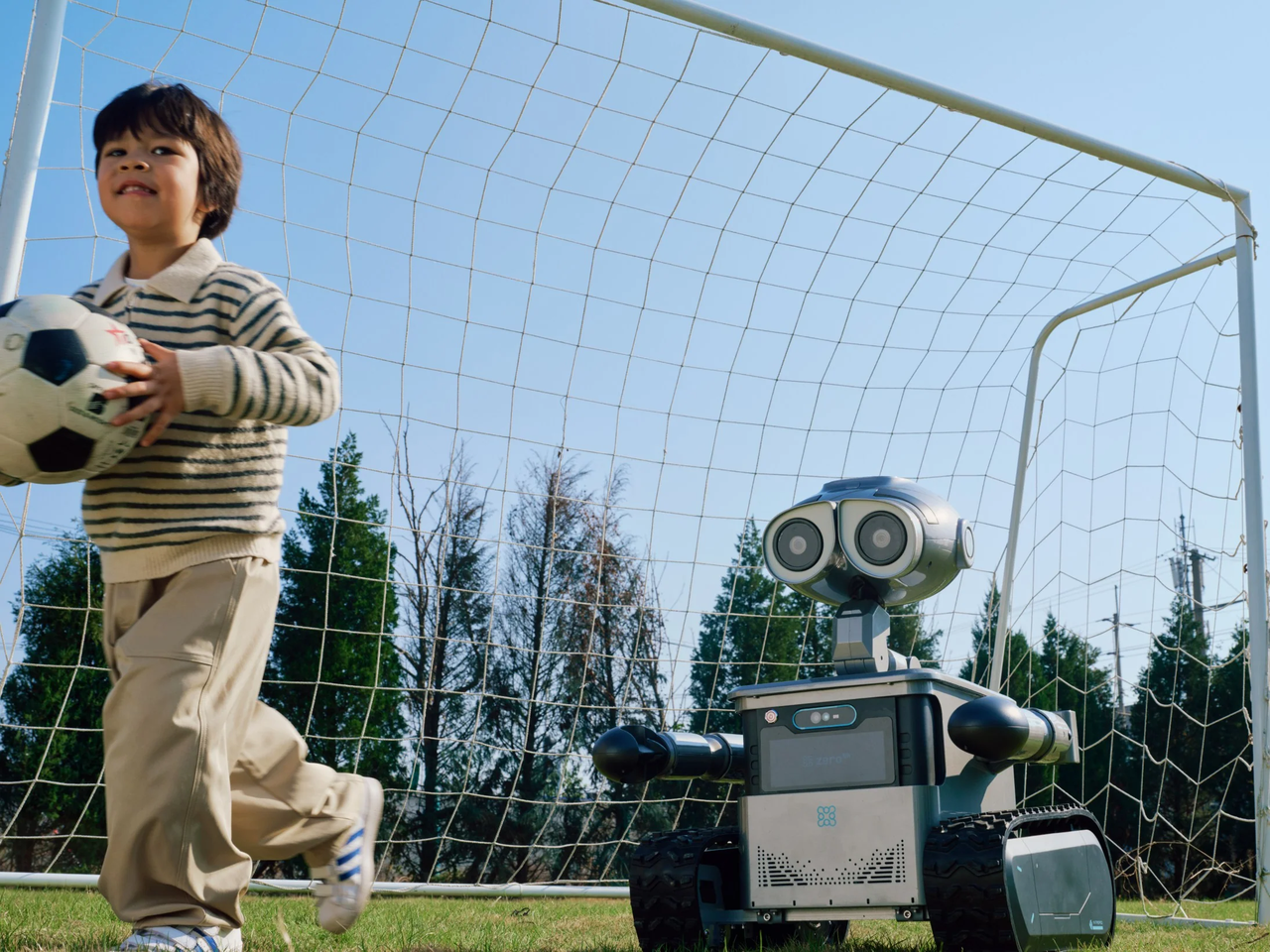
W-bot
For the most critical data security red line in overseas markets, W-bot WAWA adopts an absolute physical isolation solution, supporting private cloud storage (NAS). "We absolutely do not upload to the cloud. Each time, we only call down the model, process data locally, and feed back the results. Whether it's visual images or interaction records, the data itself always stays in the user's home," Guo Renjie says.
Regarding the brand's overseas expansion path, Guo Renjie also revealed his globalization strategy: On one hand, replicate the domestic logic of cooperating with giants overseas, seeking direct partnerships with trusted local national brands to enter mainstream channels and the mass market abroad. On the other hand, continue to aggressively attack the high-end market with its own brand, precisely positioning itself in the global ecosystem niche.

Exploring the infinite game of "uncharted territory" absolutely does not mean losing control in management. On the contrary, to survive in the fog of uncertainty, one must possess an extremely cold, precise underlying operating system. The reason Guo Renjie dares to advance on multiple fronts in the embodied intelligence track stems from the management experience refined from his past at two top "finite game" players.
During his time at P&G, he learned and mastered the operational methods of a mature consumer goods company. P&G's core competitiveness was never a single genius hit product, but a set of endgame management systems that ensured fatal mistakes were avoided. This system internalized the lessons from each mistake into SOPs and organizational structures, using the system to limit individual decision boundaries, thereby guaranteeing the lower limit of this massive machine.
If P&G endowed him with a systematic view of "defense," then Dreame reshaped his muscle memory for "offense."
In the frenzied sprint accompanying Dreame from tens of millions to 6 billion, he firmly believed in a business law: be smart, diligent, and iterate fast. Through high-frequency A/B testing, continuously understand the maximum demand. "The lower limit of each test is actually the upper limit of the previous one. As long as you drastically accelerate this process within a unit of time, you will inevitably find a better result." At the same time, discard seniority-based ranking and implement an extremely brutal but fair pure results-oriented approach.
This combination of a multinational's "error-prevention thinking" and a tech company's "rapid iteration" constitutes Zeroth's underlying genes.
Faced with a complex product line and a rapidly expanding team, he deeply understands that the founder must not become the organization's bottleneck. Therefore, he established extremely clear functional boundaries internally: his personal core focus is on the front end, including technology exploration and product definition, pushing all the way to the completed demo stage. Once the product is finalized and ready for mass production, he immediately hands it over to his absolutely trusted partner.
This refined division of labor of "front-end exploration, back-end delivery" not only ensures the extremely high yield rate of hardware mass production but also allows the entire organization to maintain a sense of steadiness while exploring infinite possibilities.

On the entrepreneurial path in the embodied intelligence track, Guo Renjie maintains a clarity: all embodied intelligence must ultimately settle on solving those unmet details of household needs.
One seemingly insignificant user feedback deeply moved him. Someone suggested they hope the robot could "pick up shoes and arrange shoes"—when people go to bed every night, the shoes they take off often face the bed. The first thing they do upon waking up the next day is sit on the edge of the bed and turn the shoes around to put them on. If a robot could quietly turn the taken-off shoes around and arrange them properly during the night, allowing people to slip their feet in immediately the next morning. Isn't that an ultimate experience enhancement?
Perhaps the ultimate value of household robots lies precisely in this: making people's lives more natural and relaxed, becoming a "member" of your family without you even noticing.

Born To Be Global 100 is a global brand CEO in-depth dialogue column initiated by Ebrun's "Mates Academy." We are looking for the next interviewee.
If you are also a "Born To Be Global" brand founder with deep thinking about your business philosophy and practice, welcome to contact us, share your story, and jointly define this era.

[Copyright Notice] Ebrun advocates respecting and protecting intellectual property rights. Without permission, no one is allowed to copy, reproduce, or use the content of this website in any other way. If any copyright issues are found in the articles on this website, please provide copyright questions, identification, proof of copyright, contact information, etc. and send an email to run@ebrun.com. We will communicate and handle it in a timely manner.
Translated by AI. Feedback: run@ebrun.com