
650 Million People, $5.49 Trillion GDP: Latin America is Becoming the Next Major Battleground for Chinese Brands Going Global
 By Wang Yu, Edited by Shi Lei
【Ebrun Original】As we step into 2026, the landscape of cross-border e-commerce continues to expand. The robustly growing Latin American market is replacing traditional markets to become the new blue ocean eagerly pursued by Chinese merchants.
"Connecting with Mercado Libre was a stroke of luck," recalled one seller. During the pandemic, a friend of his was stranded in Mexico and, to make a living, started drop-shipping goods from China. In less than half a year, the daily order volume skyrocketed from dozens to hundreds.
Encouraged by this, he decisively entered the market. Two years later, his store group's monthly sales had surpassed $500,000, and he plans to open local stores to seek even greater growth.
This story of wealth creation is not an isolated case. A group of early movers have already reaped substantial returns in Latin America, proving that in this 'New World,' action is far more important than observation.
"How to strategically position in Latin America?" Fernando Yunes, Executive Vice President of E-commerce and General Manager of Brazil at Mercado Libre, candidly stated, "Having a dedicated team, good marketing, and ensuring tax compliance are, of course, very important." But he emphasized, "My primary advice is still 'fast'—start as early as possible, even if it's with the simplest model initially."
For merchants eager to explore this 'land of plenty,' Mercado Libre is undoubtedly the 'speedboat' helping them land on the shore.
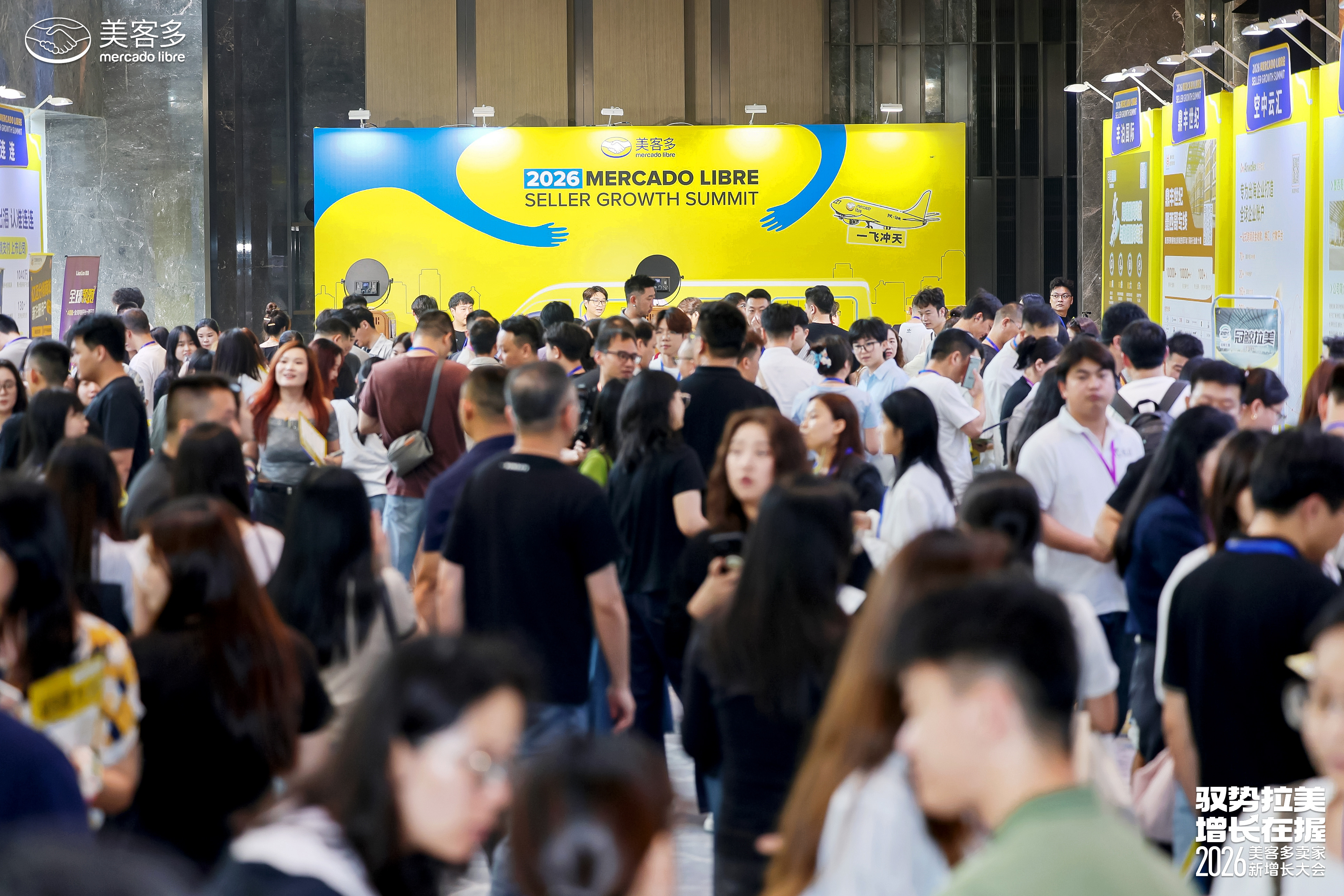
Recently, at the 2026 Mercado Libre Seller New Growth Conference, Ebrun spoke with several key executives, including Fernando Yunes, to explore why Latin America has become a hot destination for global expansion and how Mercado Libre is paving a fast track for Chinese sellers.
01
Landing in Latin America: How Can Chinese Sellers Seize the Final Window of Opportunity?
Over the past decade-plus, the market map of cross-border e-commerce has shifted several times. From Europe and America to Southeast Asia and the Middle East, Chinese sellers have repeatedly played out intense battles from 'pioneering' to 'red ocean' competition on these fronts.
"Looking globally, the last trillion-dollar 'effective blue ocean' is undoubtedly Latin America," a seller told Ebrun directly at the conference.
Data shows that in 2025, the size of Latin America's e-commerce market is estimated to reach $769 billion, a significant 21% year-on-year increase; by 2027, it is expected to join the 'trillion-dollar club.'
But more important than the numbers on paper is that this 'rich deposit' is not only relatively easy to tap but also has astonishing reserves.
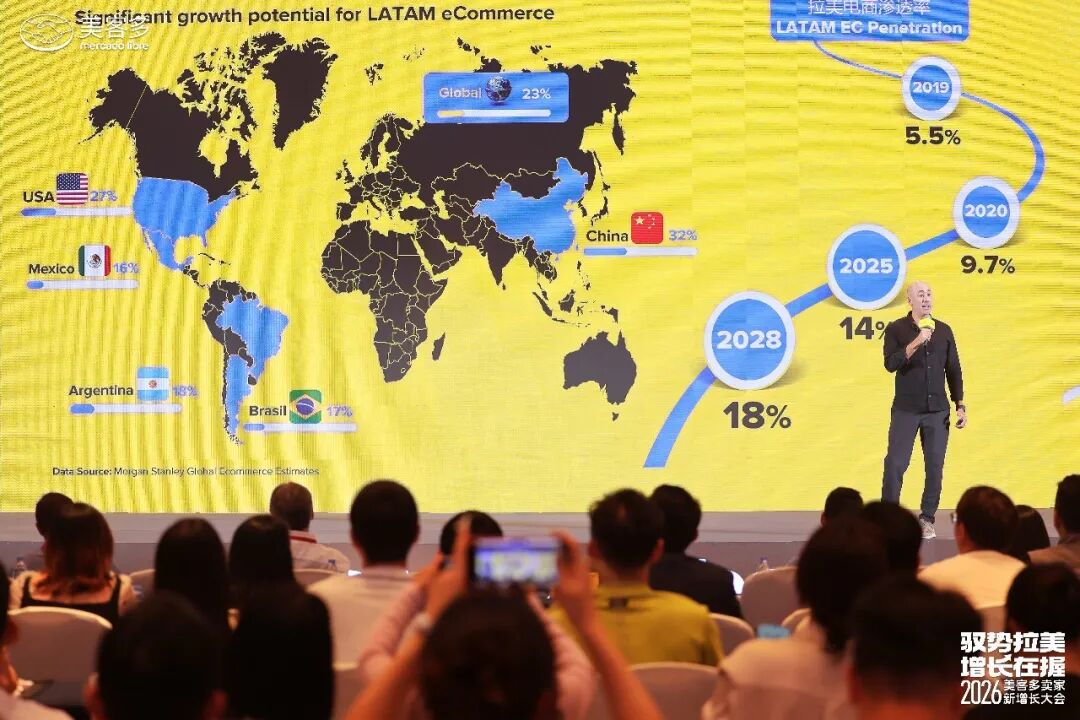
Fernando pointed out: Latin America's e-commerce penetration rate is only 14%, far below the 27% in the US, 32% in China, and the 23% global average. This significant potential gap indicates the region still has room for explosive, potentially doubling, growth.
In reality, Latin America is not a 'barren land.' Its economic fundamentals rank among the top in emerging markets: a population of 650 million creates a GDP of $5.49 trillion, with per capita income roughly on par with China's—this region not only has 'heads' but also solid purchasing power.
'Youthfulness' is another advantage: the median population age is only 31. Digital natives who grew up in the internet era are continuously injecting vitality into online consumption.
Installment payments and buy-now-pay-later have become commonplace. Data shows that during major sales events, the usage rate of Mercado Pago's 'Buy Now, Pay Later' (BNPL) service surges by over 50%.
Furthermore, the infrastructure competition among major platforms has made entering Latin America a natural progression.
Last-mile logistics capabilities are 'catching up fast.' Last year, the Latin American e-commerce logistics market reached $34.7 billion and is projected to grow to $91.9 billion by 2035, maintaining a high compound annual growth rate of 10.3%.
The payment environment has also bridged the 'digital divide.' The volume of local fast payment (FPS) transactions soared from 620 million in 2017 to 79.8 billion in 2024, a staggering 130-fold increase; annual payments per capita account also rose from 154 to 587.
These exceptional conditions have turned Latin America into a 'highland of opportunity' for global expansion—a fact undoubtedly attributed to its high compatibility with China's supply chain.
"Latin American consumers have an extremely high acceptance of Chinese products. When introducing Chinese sellers, demand is released almost instantly without much market guidance," Fernando noted.
On one hand, the strong 'resonance' in consumer preferences between North America and Latin America has propelled a group of 'mature North American sellers' to seek gold in Latin America.
The founder of a jewelry brand observed that the US and Canada have large Hispanic populations, and trends there often ignite in Latin America after a short lag. "This allows us to transfer our successful experience from North America to Mexico and even all of Latin America, achieving 'selling the same inventory across the Americas,'" she said.
On the other hand, for players with strong supply chains focused on value-for-money, Latin America is also fertile ground for latecomers to overtake.
Fengshun Cross-border, a company with over a decade of experience in China's footwear and apparel sector, surpassed 100,000 orders in its first year going global. Hu Wenbin, General Manager of Fengshun, claimed: "The Latin American footwear and apparel industry is underdeveloped, highly reliant on imports, and has extremely low brand concentration. Most sales volume flows to generic brands. This creates a great opportunity for factory brands with supply chain advantages to overtake on the curve."

"Most product categories have supply gaps to varying degrees." Karen Bruck, Vice President of Cross-border E-commerce Business at Mercado Libre, revealed to Ebrun.
The industry consensus is that the phenomenon of 'demand exceeding supply' still exists in Latin America, and the region is still in a pioneering stage welcoming new supply.
"It's people looking for goods, not goods looking for people," one seller summarized. "Here, you can still see platforms competing to offer benefits to attract merchants—it's a flowing stream, not a swamp of fighting over a fixed pie."
02
Mercado Libre's Three Major Model Upgrades, Helping Sellers 'Pack and Go' to Latin America
The explosion of the Latin American market is not accidental but a victory ground for long-termists.
Over roughly 27 years, Mercado Libre has become the 'leader' in the wave of e-commerce infrastructure development in Latin America. Over the past five years, it has cumulatively invested over $40 billion in 'paving the road and building bridges' to clear business obstacles.
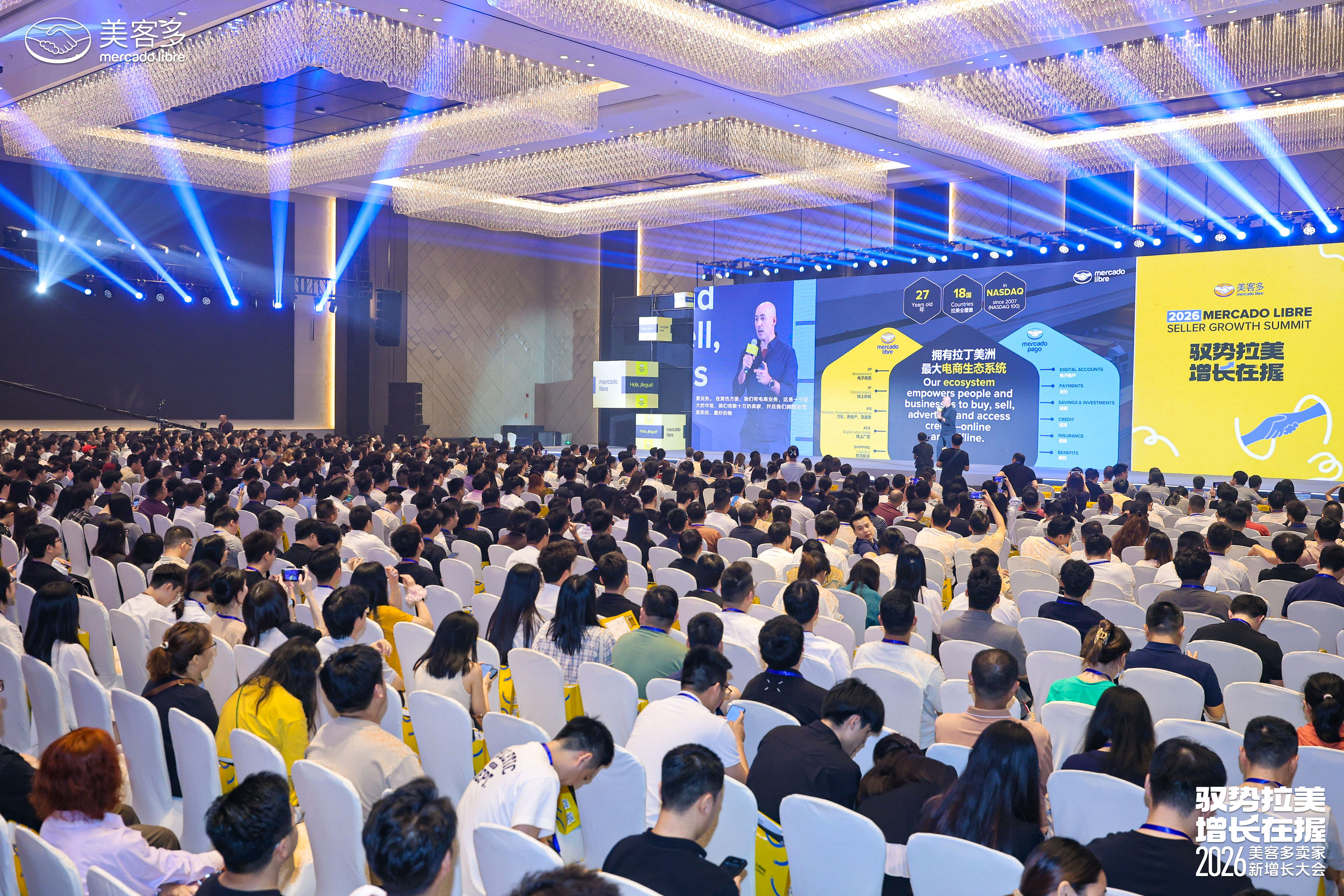
"This year, we expect our investment scale in Latin America to approach $15 billion, reaching a new high," Mercado Libre officials stated at the conference. This continuous infusion of real capital has built a formidable competitive moat.
"On the fulfillment side, efficiency is Mercado Libre's calling card," Fernando introduced. "As Latin America's largest logistics network, Mercado Envios can achieve same-day or next-day delivery for 75% of orders; in core cities, the speed is even faster."
Focusing on the payment side, Mercado Pago (payment business) and Mercado Crédito (credit business) are seen as contenders for the 'holy grail' that will shape the future face of Latin America's digital finance industry.
"Among them, the former is already Latin America's largest fintech platform. It has reshaped local payment convenience through diverse solutions like credit cards, balance payments, installments, BNPL, and combined payments," Fernando said.
Data also shows its monthly active users have grown for 10 consecutive quarters, with nearly 3 million new credit cards issued in Q4 last year alone.
Building upon this massive infrastructure foundation, over the past year, Mercado Libre has continued to advance on 'three fronts' to empower Chinese sellers.
First, expanding warehouses and densifying the trunk network—logistics chain construction remains a 'work in progress.'
Last year, it added 16 hub facilities, with fulfillment volume surging 41% year-on-year, an increase of nearly 500 million items. "We will also push for same-day delivery in more regions and further penetrate smaller towns and underserved areas," Fernando stated.
Additionally, to expand supply of high-value, large-volume categories, Mercado Libre launched dedicated oversized item warehouses, extending size limits to 2 meters/50KG.
Second, operational tool iteration and upgrades, significantly improving usability.
Over the past six months, Mercado Libre's Chinese website, Chinese-language backend, and AI Seller Assistant have been launched. Simultaneously, the accuracy of data dashboards and analytical tools has continuously improved, shifting sellers from 'blind exploration' to 'precision targeting.'
Carte, COO of ZIYOUHOME, said, "When we first entered Latin America, the platform provided us with macro data for sub-categories like furniture, pets, and storage. Using this as a benchmark, we compared it with our thousands of SKUs for Europe and the US. We focused on promoting those that met the criteria for average order value, sales volume, and profit." The results proved effective, with hit products emerging one after another.
Third, creating new growth avenues and improving the ecosystem.
While orderly advancing the opening of new sites (Uruguay, Peru) to create growth by 'expanding geography,' Mercado Libre is also continuously enhancing ecosystem services.
Karen revealed: "We have assembled a dedicated team of over 200 people in China and introduced many top-tier service providers, aiming to eliminate operational bottlenecks." It is reported that its SPN (Service Provider Network) ecosystem is currently partnered with over 40 domestic service providers, with a service matrix covering the entire global expansion chain.
Thanks to solid platform development, Mercado Libre achieved remarkable results in 2025.
In Q4, its GMV reached $19.9 billion, a 37% year-on-year increase—continuing an unbroken trend of growth for thirty consecutive quarters. The number of buyers surpassed 80 million, a significant increase of 16 million year-on-year.
Regarding this, Fernando stated that Mercado Libre currently holds a 40%–50% market share in Brazil, Mexico, and Argentina, firmly occupying the top spot with overwhelming advantages in each market.
On the other hand, its merchant acquisition efforts in China are also advancing triumphantly, constantly setting new transaction records. That year, the overall sales of Chinese sellers grew 38% year-on-year, with core top sellers seeing growth exceeding 80%. The number of China Direct Shipping (IDS) small parcel items skyrocketed by 176%.
Karen revealed that over 100,000 sellers have already expressed interest in joining. According to Ebrun's on-site understanding, the online livestream viewership for this conference ultimately exceeded 40,000, demonstrating the current high market enthusiasm for Mercado Libre.
03
Reshaping the New Landscape: How to Move from 'Selling Goods' to 'Building Brands' in Latin America in 2026?
In 2026, Mercado Libre has charted two parallel strategic paths.
Attracting quality suppliers and expanding the supply of value-for-money products remains its primary goal.
To this end, Mercado Libre has successively launched three models: Factory to International (FTI), Semi-Managed, and Fully-Managed.
FTI offers high commission discounts, supplemented by comprehensive logistics and operational support. The Semi-Managed model has the platform handle logistics, allowing sellers to step back. Fully-Managed goes a step further, shifting from 'light operations' to 'zero operations,' where merchants only need to supply goods, truly achieving 'pack and go' expansion.
This combination has attracted a large number of integrated manufacturing and trading sellers.
Bicycle parts seller WEST BIKING is a typical beneficiary. As a 'capable player' deeply rooted in the supply chain, after joining the FTI program, it quickly completed its cold start with a 'lightweight product selection + self-fulfillment' model. Within six months of launch, a $10 cycling backpack achieved monthly sales exceeding a thousand units.
"Migrating SKUs already validated in Europe and the US to Mercado Libre, reusing supply chain resources, and improving cross-market product testing efficiency can also create super products," they summarized.

After solving the 'ability to enter,' Mercado Libre's next strategic blueprint is to push sellers to build brands and take root locally—moving towards 'ability to operate.'
The Semi-Managed model provides convenience for merchants to focus on operations and optimize product selection. Meanwhile, the 'Rising Star Brands Program' and diversified local store support policies more clearly outline Mercado Libre's vision of building a 'branded iron army.'
The Rising Star Brands Program precisely targets mature brands with global expansion DNA or industry benchmark status. At the seller conference, the official clarified the entry threshold as 'annual sales exceeding $300,000 on a single platform,' extending an olive branch to top sellers.
"Latin America is definitely not just about 'value for money.'" Fernando emphasized. "Branded goods and innovative products also have fertile ground here."
For example, Thunderobot Technology, known as the 'first e-sports equipment stock' on the Beijing Stock Exchange, made a splash in its first participation in the 'BUEN FIN' mega-sale—selling out three months of inventory in three days. Moreover, its core product's average order value reached as high as $1,000, fully demonstrating the market's willingness to pay for premium consumption and brand premium.
"Mercado Libre has accumulated a vast base of high-consumption customers," said founder Guo Wei. "The key is providing an experience commensurate with the value. We implement a localization strategy throughout—product planning, marketing activities, after-sales service, all closely tied to local consumption customs."

On the other hand, many sellers who started with value-for-money products are also 'moving upstream,' building influence and increasing average order value.
When first joining Mercado Libre, Dingcheng Technology fell into the traditional B2B trade misconception of 'the cheaper, the better,' focusing on the low-end market.
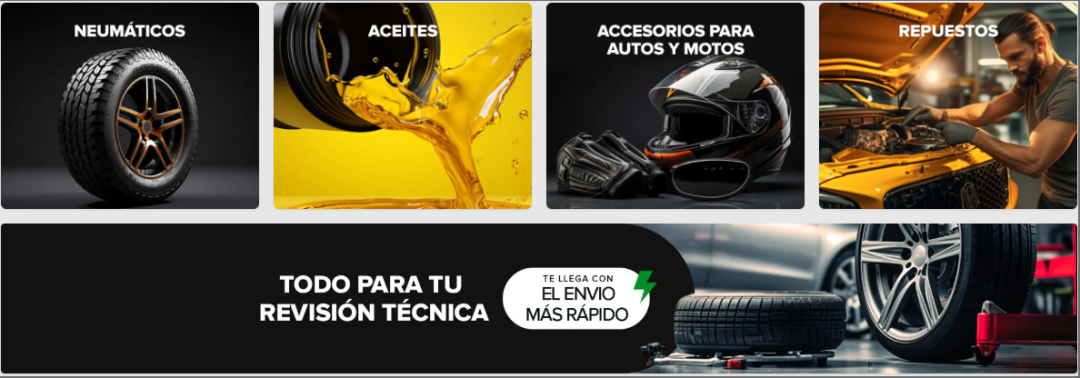
"But actual combat showed us that Latin American consumers have higher demands for product functionality and perfection. The products that truly contribute profit are actually mid-to-high-end ones," its person in charge pointed out. Therefore, Dingcheng Technology decisively changed course, shifting to 'covering all price segments from high to low,' fully focusing on the automotive lighting category to make an impact.
Regarding this, Karen noted: "To stay evergreen in the Latin American market, relying solely on refined operations is far from enough. The awakening of 'branding' consciousness is the key to victory."
At this conference, Mercado Libre officials also sent a clear signal: continue to support Chinese sellers in opening 'local stores' and increase brand-specific incentives to safeguard Chinese brands' expansion into Latin America.
German Spataro, Senior Vice President of Core E-commerce Business at Mercado Libre, also revealed that in the future, the platform may expand its Affiliate Marketing system to multiple country markets and launch live-streaming commerce features. Leveraging Chinese sellers' rich practical experience in social commerce, this will undoubtedly create more opportunities for them to deeply reach Latin American consumers.
The potential of the Latin American e-commerce blue ocean remains, and this 'land of milk and honey' awaits deeper cultivation. Early movers have already secured their position at the forefront. What latecomers face is not residual warmth, but more growth and wealth creation miracles waiting to be refreshed.
Ebrun will continue to track and report on this intelligence. To learn more information related to this article, please scan the QR code to follow the author on WeChat.

[Copyright Notice] Ebrun advocates respecting and protecting intellectual property rights. Without permission, no one is allowed to copy, reproduce, or use the content of this website in any other way. If any copyright issues are found in the articles on this website, please provide copyright questions, identification, proof of copyright, contact information, etc. and send an email to run@ebrun.com. We will communicate and handle it in a timely manner.
Translated by AI. Feedback: run@ebrun.com