
Ozon Global: Over 70% of Russian Buyers Recognize Improved Quality of Chinese Goods, Nearly 60% Expect to Increase Purchases
Ebrun Exclusive, April 27th: Recently, Ozon Global released a survey on Russian cross-border e-commerce consumers. It indicates that Chinese goods have established a high level of market awareness and trust among Russian consumers, entering a new development stage characterized by high recognition, high stickiness, and high expectations.
The survey focused on platform buyers' cross-border shopping habits, impressions of Chinese goods, consumption decision-making, and shopping journeys. The sample covered over 1,000 Ozon platform consumers aged 18 to 55, with a male-to-female ratio of 1:1.
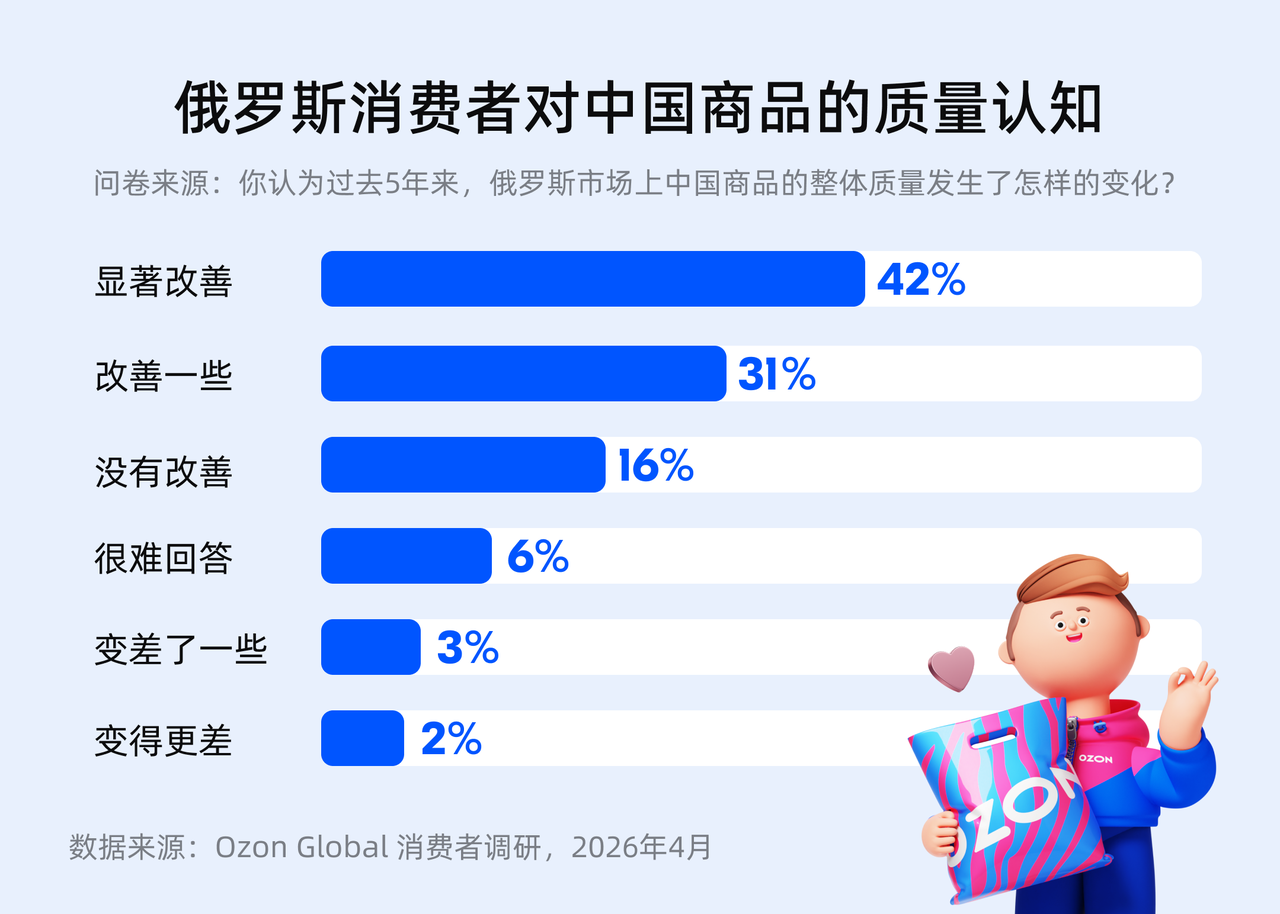
Russian consumers' recognition of the quality of Chinese goods has significantly improved, with over 70% believing the quality of Chinese goods has improved over the past five years. Simultaneously, future purchase expectations are highly optimistic, with nearly 60% expecting to increase the proportion of Chinese goods in their purchases over the next three years.
The survey shows that Russian consumers' perception of the quality of Chinese goods has undergone a significant positive shift. 73% of respondents believe the quality of Chinese goods has improved over the past five years, while only 5% believe it has worsened.
Notably, the proportion of those who believe it has "significantly improved" is highest among the 18-25 age group, indicating that the initial impression of Chinese goods among this new generation of Russian consumers is already based on "good quality."
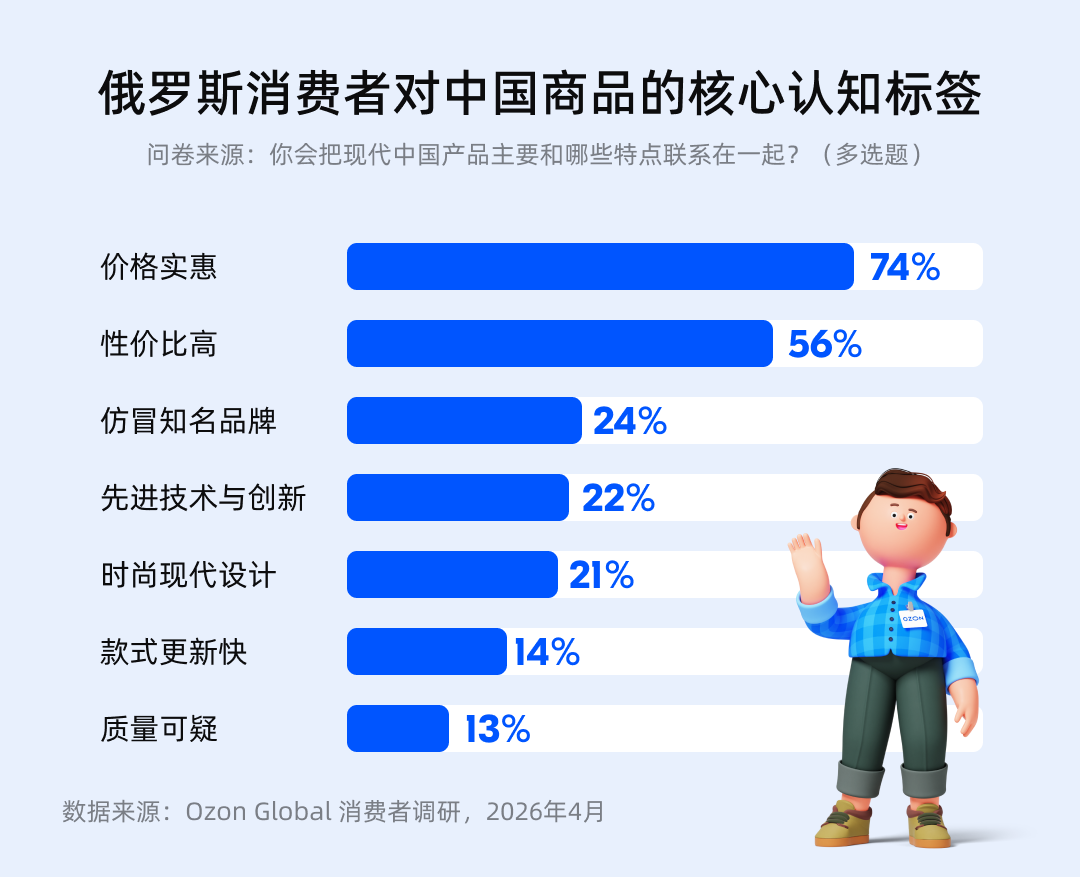
It is worth mentioning that the 18-25 age group's perception of Chinese goods leans more towards advanced technology and innovation, as well as fashionable and modern design, significantly higher than other age groups. This suggests that Chinese goods have already established a solid foundation of market awareness among Russia's new generation of consumers.
China's diverse range of product categories has widely entered the cross-border shopping lists of Russian consumers. Among them, clothing and footwear lead the way with a 62% share, followed by home furnishings and decor, electronics, and digital accessories, each accounting for around 40%. Additionally, niche categories such as handicraft supplies, cosmetics, children's products, tools, and automotive/motorcycle supplies have purchase proportions ranging between 15% and 27%, showing a trend of accelerated coverage across multiple categories.
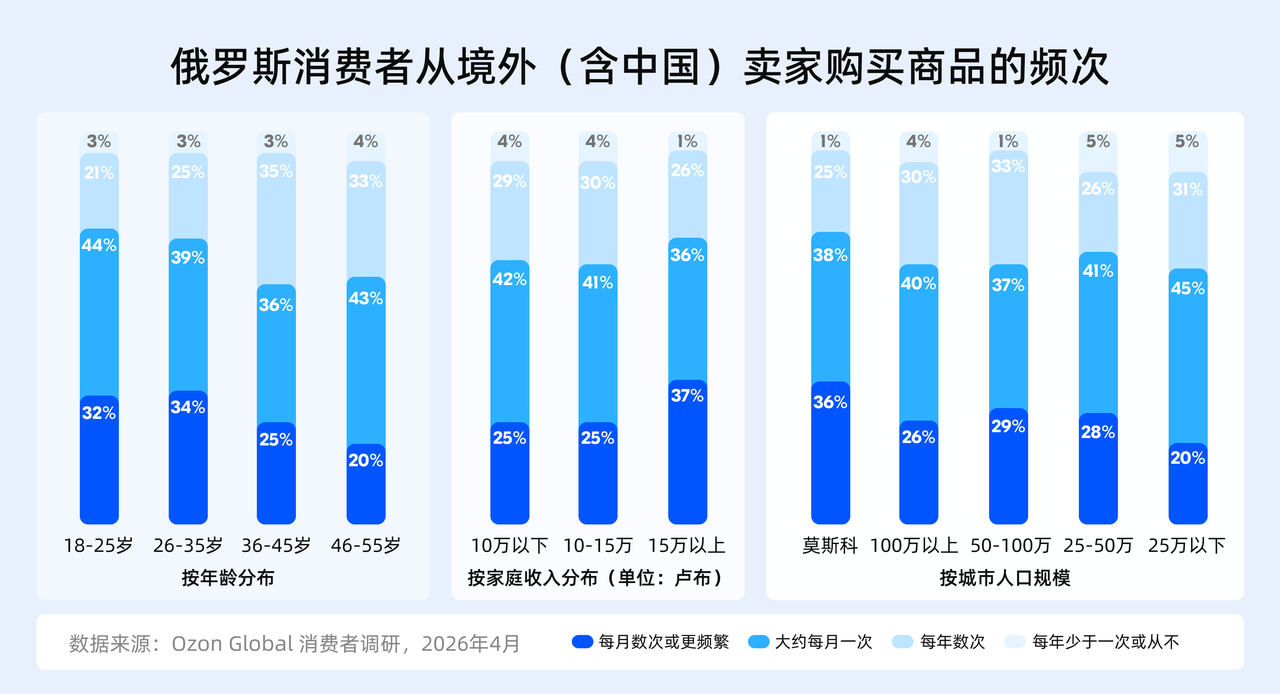
Among frequent buyers (several times a month or more often), high-income households (monthly income of 150K rubles) account for 37%, nearly 1.5 times that of low-income households. The 26-35 age group has the highest proportion of frequent buyers, exhibits the most positive future consumption expectations, and has the strongest recognition of improved product quality from China. This indicates that Chinese goods in the Russian market are attracting a dynamic buyer segment characterized by high stickiness, high recognition, and high consumption.
For Chinese sellers, this means that growth in market share requires a shift from a short-term mindset focused on "customer acquisition" to a long-term strategy centered on "repeat purchases and customer retention."
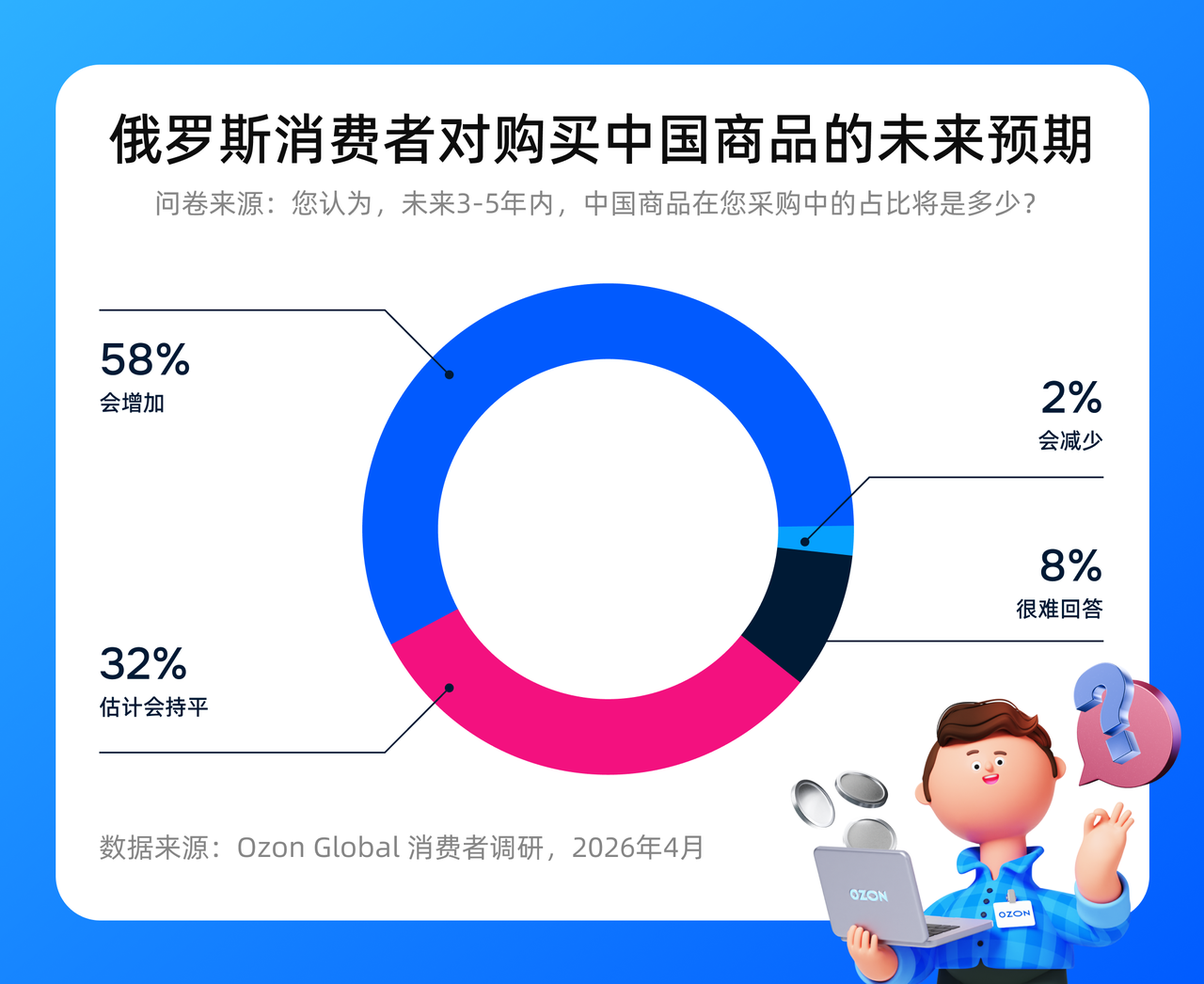
Russian consumers are highly optimistic about their future purchases of Chinese goods. When asked about the share of Chinese products in their purchases over the next 3-5 years, 58% of respondents expect the proportion of Chinese goods to increase, 32% expect it to remain the same, and only 2% expect it to decrease. Male respondents are more optimistic than females.
The most optimistic groups are the 26-35 age group (62%) and the middle-income group with a monthly household income of 100-150K rubles (64%). These two groups are precisely those with the strongest willingness for repeat purchases and the most positive perception of quality improvement. They represent the overlap between current major consumers and future household consumption decision-makers, making them a high-potential growth segment that Chinese sellers can focus on.
Ebrun will continue to track and report on this intelligence. To learn more about information related to this article, please scan the QR code to follow the author on WeChat.

[Copyright Notice] Ebrun advocates respecting and protecting intellectual property rights. Without permission, no one is allowed to copy, reproduce, or use the content of this website in any other way. If any copyright issues are found in the articles on this website, please provide copyright questions, identification, proof of copyright, contact information, etc. and send an email to run@ebrun.com. We will communicate and handle it in a timely manner.
Translated by AI. Feedback: run@ebrun.com