
Wildberries Parent Company's Annual GMV Exceeds $73.3 Billion: Russia's Largest E-commerce Platform Aggressively Expands Logistics Infrastructure and Boosts Merchant Recruitment in China
[Ebrun Exclusive] April 17 News: Recently, RWB Group, the parent company of Russia's largest e-commerce platform Wildberries, released its 2025 financial data.
The data shows that in 2025, RWB Group's Gross Merchandise Volume (GMV) surpassed $73.3 billion, a 49% year-on-year increase compared to $44.2 billion in 2024. Although the growth rate slowed from the previous year's 60%, this performance still slightly outperformed the approximately 45% GMV growth of its main competitor Ozon—especially considering Wildberries' larger business base.
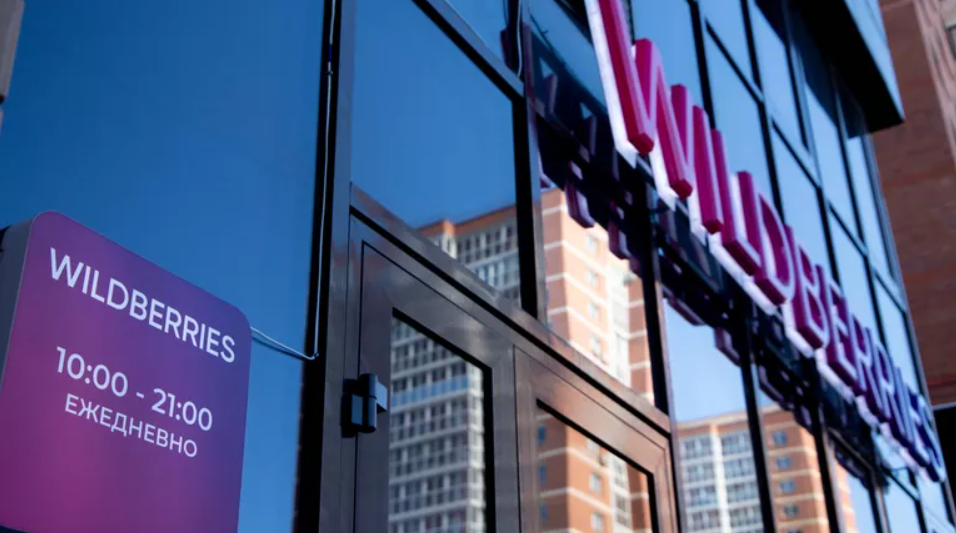
It is reported that Wildberries' potential consumer base has now reached 200 million, with over 81 million monthly active users on its mobile application. The platform operates in markets including Russia, Kazakhstan, Uzbekistan, Armenia, Georgia, Belarus, Tajikistan, Kyrgyzstan, as well as China, the UAE, and Ethiopia.
According to its official introduction, the main drivers of the platform's growth in 2025 included increased purchase volumes, expansion of product categories, and continuous improvement of logistics and technology infrastructure.
I. Battling the 'Infrastructure Race': Accelerated Warehouse System Growth and Denser Pickup Point Network
For a vast country like Russia, logistics is inherently crucial for e-commerce infrastructure.
In the past, issues such as insufficient fulfillment capacity, unpredictable delivery times, and limited coverage directly restricted the expansion boundaries of e-commerce. In recent years, this situation has been rapidly changing. E-commerce logistics facilities centered around overseas warehouses and pickup points have entered an unprecedented construction boom in Russia—with e-commerce platforms being the main drivers of this infrastructure wave.
Data shows that in 2025, RWB invested over $3.7 billion in logistics and IT infrastructure, as well as new projects and directions, launching 12 new warehouses. Currently, its logistics complex total area has reached 5.2 million square meters, with over 200 facilities, gradually building a multi-level logistics system combining 'warehouses + sorting centers + pickup points'.
For comparison, by the end of 2025, its main competitor Ozon's logistics infrastructure area was approximately 5 million square meters. The industry leader and runner-up are engaged in continuous close competition in logistics investment and scale expansion, with a narrow gap. The third-ranked Yandex Market's logistics facility scale is roughly between 800,000 and 1.2 million square meters, showing a significant volume gap compared to the top two.
Specifically for Wildberries, the company's own logistics complexes already cover almost all major Russian cities. Over 30 automated sorting systems and more than 250 robots operate within the warehouses. Leveraging automation, the company successfully surpassed the milestone of processing 7 million items daily—accounting for about 30% of its total processing volume.
Furthermore, beyond standard item warehousing and fulfillment services, in 2025, Wildberries vigorously promoted the development of its oversized item fulfillment capabilities. This was primarily driven by explosive growth in large item categories (such as major appliances, bathroom fixtures, audio-visual equipment, sports gear, and furniture) on the platform: in 2025, the number of related sellers surged by over 1.5 times, and transaction volume achieved a nearly 3-fold leap.
By Q1 2026, Wildberries had added 3 new freight delivery zones, with over 8 facilities operational, totaling more than 83,000 square meters usable for oversized product shipments. Currently, facilities capable of receiving oversized goods number 34, with a total area exceeding 410,000 square meters.
Looking ahead to 2026, RWB plans to continue developing its logistics infrastructure by constructing new logistics complexes and modernizing existing facilities in various Russian regions and other countries where it operates—planning to add 1.7 million square meters of space.
Additionally, it is committed to expanding mid-mile and last-mile transportation capacity and has already successfully integrated Russia's three major transportation service platforms—Gruzovichkof (freight), Taksovichkof (on-demand delivery), and Citymobil (taxi and ride-hailing)—into the RWB ecosystem. This will help further optimize its service infrastructure and improve delivery speeds for customer orders to over 100 cities, including remote areas in the Far East and Siberia.
Another noteworthy aspect is the platform's progress in its pickup point network layout.
Due to unique geographical and social conditions, the Russian e-commerce market has long fostered a 'pickup point first' consumption and fulfillment culture.
These points are typically not simple parcel lockers in the traditional sense, but rather branded, clean, conveniently located, and fully functional pickup points. They assist consumers with pickup and returns, allow trying on clothes or testing electronics on-site, and provide corresponding usage advice and service support.
Consequently, the scale of the pickup point network has become a key metric for measuring a platform's strength.
Wildberries data shows, over the past year, the number of its pickup point (ПВЗ) operators increased by 62% year-on-year. Among them, 67% of partner points were opened by partners operating two or more pickup points. By the end of last year, the platform's pickup points exceeded 94,000—a 43% year-on-year increase compared to the previous year—covering over 20,000 settlements in Russia and other operating countries.
Currently, over 90% of Wildberries orders can be delivered within a 10 km radius, with next-day delivery achievable in most cities. Customers place over 25 million orders daily on Wildberries, and 95% of customers choose to collect their orders from pickup points.
In the past year, Wildberries primarily promoted two major strategic initiatives for its pickup point network.
First, opening applications for private residence pickup points, focusing on rural areas.
Last October, Wildberries announced that pickup points (ПВЗ) could be established in private residences and began accepting applications on its 'Partner Program official website'. Applicants can open simplified pickup points in towns with populations under 5,000: requiring a minimum area of just 10 square meters, no need for renovation, only a table for dispatch and order storage space, along with one surveillance camera and one smart device (smartphone, tablet, or laptop).
This initiative is expected to quickly fill the 'last-mile' service gap in Russia's vast rural areas.
Second, renovating pickup points to a unified standard, aiming for 'brand rejuvenation'.
In December last year, Wildberries released a new brand manual and subsequently began uniformly renovating its pickup points accordingly. This change will gradually extend to older points that have been operational for years.
The core of this update is to redesign the spatial layout and usage logic of pickup points to further enhance convenience and service quality. In the future, Wildberries pickup points will achieve high visual consistency, thereby strengthening brand recognition and shifting focus from 'scale expansion' to 'experience upgrade'.
II. A Giant with 'No Immediate Need for IPO': Robust Profitability and a Balanced Commission Strategy
As e-commerce platforms are often perceived as 'cash-burning machines', their ability to achieve positive profitability has always been a core issue closely watched by capital markets—especially in emerging markets, where this issue is more pronounced.
RWB Group, behind Wildberries, is perhaps one of the very few cases in this cohort capable of maintaining long-term stable profitability.
In 2025, the company's net profit increased to $2.1 billion—for comparison, Southeast Asian e-commerce giant Shopee's parent company Sea Group reported a net profit of $1.6 billion for the same period. Moreover, its debt burden remains at a reasonable level, with a net debt-to-EBITDA ratio not exceeding 2x. In contrast, its main competitor Ozon remained in a slight loss position for the full year, only achieving positive net profit in recent quarters, and plans to achieve full-year profitability in 2026.
Furthermore, Wildberries has no short-term plans for an IPO to seek more 'hot money' inflows. This is also uncommon among regional platforms.
Wildberries founder and RWB head Tatyana Bakalchuk has repeatedly stated that the company group does not intend to pursue an IPO:
'The answer regarding an IPO remains the same as before—we see no need for it. If we talk about financing, we do not require external funds.' In December 2023, Tatyana Bakalchuk explained this decision by stating that public companies exist to serve shareholder interests, while Wildberries aims to 'improve the lives of millions of people.'
Complementing Wildberries' stable profitability is its nuanced commission strategy that seeks 'balance.'
In fact, in recent years, pressure from capital markets has prompted many overseas e-commerce platforms to raise sales commissions, logistics fees, and in-platform advertising prices, continuously improving monetization capabilities.
Wildberries has also attempted to find a balance between affordability for merchants and fee increases, balancing profitability with merchant stickiness, while providing structural guidance and governance for its supplier system.
Last year, while raising commissions overall, it reduced commissions for specific categories, low-priced goods, and small and micro merchants, and also promised a 'commission freeze' guarantee, aiming for a balanced approach with appropriate increases and decreases.
Specifically, the platform underwent multiple rounds of price adjustments in 2025, characterized by 'initial increases followed by decreases.'
There were two key upward adjustments: first, a general commission increase of 5% across multiple categories implemented in June; second, a structural adjustment for the FBS model in September, where commissions for most goods increased by 3.5%, while logistics fees rose by 20% to 40%.
Simultaneously, targeted commission reduction strategies were intensively implemented in the second half of the year to balance the seller ecosystem.
In August, Wildberries reduced commissions for some categories and products, especially for items priced below 500 rubles, with reductions of up to 7%; at the end of October, to prepare for the peak season, the platform launched a new round of commission reductions targeting small and micro enterprises, applicable to both FBW and FBS models, with some categories seeing reductions of up to 7%—reportedly benefiting over 80% of grassroots sellers.
In November of that year, the platform signaled stronger policy stability: officially announcing a 6-month 'commission freeze period' during which it would not raise fees for Russian sellers, maintaining the current commission range of 3%-25%+. Meanwhile, Wildberries also launched several fee reduction plans, under which it helped sellers reduce handling fees by 6%.
Entering 2026, driven by regulatory factors, Wildberries advanced a new round of commission system restructuring.
In response to Russian government requirements, the platform began designing adjustment plans in March, formally submitted them for review in early April, and plans to complete implementation by late May.
Focusing on specific measures, the core is to align commission standards for Chinese and Russian sellers by category, while optimizing pricing and promotion mechanisms—including increasing sellers' pricing autonomy, clarifying discount responsibility, and allowing sellers to choose whether to participate in platform promotions, thereby enhancing overall operational transparency.
III. Pushing into the Chinese Market: Lowering Entry Barriers, Competing with Old Rivals for 'Upstream Supply Chain'
In 2025, Wildberries continuously increased its efforts targeting the Chinese market.
In fact, in recent years, e-commerce platforms from Russia and the broader CIS region have been flocking to mainland China for merchant recruitment, extending olive branches to upstream suppliers, such as OZON, Yandex Market, UZUM, ASRMALL, etc. Wildberries also held its first official announcement conference in China last April, declaring a full opening for merchant recruitment in China.
Chinese merchants can choose official logistics solutions suited to their needs to ship goods to Russia, with payment settlement cycles shortened to 7 days, and support for automatic RMB settlement.
Currently, the Wildberries seller backend has embedded Chinese language pages, all seller tools support Chinese, and AI tools are provided to assist with translating product descriptions and buyer chat content.
It should be noted that although not the first mover in merchant recruitment, the later-entrant Wildberries still demonstrated sincerity by lowering entry barriers to attract Chinese cross-border sellers.
One seller told Ebrun that last year, merchants needed to provide annual turnover of 30 million RMB to join Wildberries; however, in this recruitment conference, Wildberries did not specify clear turnover requirements for seller onboarding, only basic requirements such as a business license, phone number, compliant operations, and high-quality products.
Furthermore, Wildberries has progressively improved the software and hardware support of its seller service system.
'Software-wise', Wildberries launched a new onboarding system, specifically designed for new sellers, aiming to simplify the store setup process.
This system provides an upgraded onboarding guide, leading sellers step-by-step from store activation to their first order, helping new sellers quickly grasp the platform's core tools and operational logic. Additionally, sellers can access detailed guidance on operational issues through the Chinese Help Center established by Wildberries for Chinese sellers.
On the 'hardware' side, Wildberries established a Chinese Merchant Service Center, which has now set up five sub-centers in Shenzhen, Ningbo, Hangzhou, Tianjin, and Nantong, providing offline support points and organizational carriers for localized services, merchant incubation, and industrial belt exploration.
Regarding this, Viacheslav Savin, Head of Cross-border Business at Wildberries, stated:
'We are committed to lowering the entry barriers for cross-border sellers: continuously improving the logistics system, financial tools, and localized support. Today, Wildberries provides Chinese sellers with access to the Russian market, directly reaching tens of millions of consumers, backed by well-established fintech and logistics infrastructure.'
Ebrun will continue tracking this development. To learn more information related to this article, please scan the QR code to follow the author on WeChat.

[Copyright Notice] Ebrun advocates respecting and protecting intellectual property rights. Without permission, no one is allowed to copy, reproduce, or use the content of this website in any other way. If any copyright issues are found in the articles on this website, please provide copyright questions, identification, proof of copyright, contact information, etc. and send an email to run@ebrun.com. We will communicate and handle it in a timely manner.
Translated by AI. Feedback: run@ebrun.com