
Jiawei Capital's Wei Zhe: Founders Must 'Physically Go Global'! On-the-Ground Experience Trumps Any Report
[Ebrun Original] Many bosses sit in their domestic offices, read consulting firms' PPTs, and believe they understand overseas markets. But Jiawei Capital Founding Partner and Chairman Wei Zhe states bluntly: They are far from it. What is the most critical thing founders lack to steer a global brand? Just two words: On-the-ground experience.
First, 'on-the-ground experience' regarding overseas consumers. Wei Zhe often asks outbound entrepreneurs two questions: Do you have Instagram installed on your phone? Do you know how to use WhatsApp? If you don't even use these national-level apps, how can you claim to understand local youth? His advice is straightforward: Go live in your target market for a while—not just a brief business trip, but actually live there. He has seen some founders go abroad and become 'homemakers,' personally shopping for groceries, cooking, and naturally gaining an intimate understanding of local kitchenware and consumption habits through real-life scenarios. This 'physical presence abroad' yields insights more accurate than any research report. Merely sitting in a domestic office brainstorming will never lead to creating good products.
Second, 'on-the-ground experience' regarding global talent. A major misconception for many companies expanding overseas is feeling they are fighting alone, starting everything from scratch. In reality, pioneers like Huawei, Hisense, and Lenovo have already cultivated the ground for decades, nurturing a large pool of mature talent. But how to utilize this talent? Wei Zhe has two ironclad rules: Prioritize 'first-generation immigrants.' Whether in Europe, the US, or elsewhere, first-generation immigrants are often an excellent choice. They understand the local culture while retaining the Chinese drive to establish roots and strive hard. Second or third-generation immigrants are often too assimilated and lose that 'wolfish' hunger. Implement 'one company, two systems.' Overseas teams cannot simply adopt domestic management models. He highly advocates for a 'joint venture' mechanism, even daring to offer overseas general managers 40% equity, making them true local partners and transforming the traditional employer-employee relationship into an entrepreneurial partnership. This genuinely sparks a sense of ownership in overseas leaders.
Third, teams should be complementary; don't expect a jack-of-all-trades. Wei Zhe believes those who can operate global brands are rarely 'perfect individuals' but rather complementary 'iron triangles' or 'twin stars.' Reviewing China's most successful new generation of outbound brands, such as Insta360, Anker, and xTool, he notes they almost always have a stable 'co-founder duo' structure: a 'tech geek' with strong product and R&D intuition paired with an 'operator' who complements capabilities in global compliance, capital operations, and overseas execution. So, stop trying to cultivate perfection alone or aspiring to be the perfect CEO. Those who need 'physical presence abroad' should go to the front lines to sense the market; those who need partners should seek them out. Building a global brand is never a solo victory.
(Content from Ebrun's Mati Club dialogue with Wei Zhe, core instructor of the Jiawei Capital Global CEO Executive Program, January 2026.)
Each era has its own proposition, and each generation of entrepreneurs has its Long March. As the dividend of 'wild growth' diminishes, as the simple game of 'model innovation' ends, and as the globalization chess game enters more complex and unpredictable deep waters—we face a question of the times that all Chinese entrepreneurs must answer: In the next decade, what kind of enterprises can transcend cycles? What kind of leaders can lead their brands to truly win global respect? We firmly believe the answer no longer points to any external 'trends' or 'secrets,' but returns to the entrepreneurs themselves: Your cognitive boundaries are the enterprise's only boundaries; your decision-making system is the enterprise's ultimate operating system.
Mati Club, in partnership with Jiawei Capital, officially launches the 'Jiawei Capital Global CEO Decision-Making Executive Program.' This is not just another business school course but a deep cultivation and refinement journey. We will join like-minded entrepreneurs to return to business fundamentals, face real challenges head-on, and collectively forge a new 'decision-making operating system' capable of leading enterprises through the future. The endpoint of this journey is not a business plan, but an evolved you and a sustainably growing enterprise.
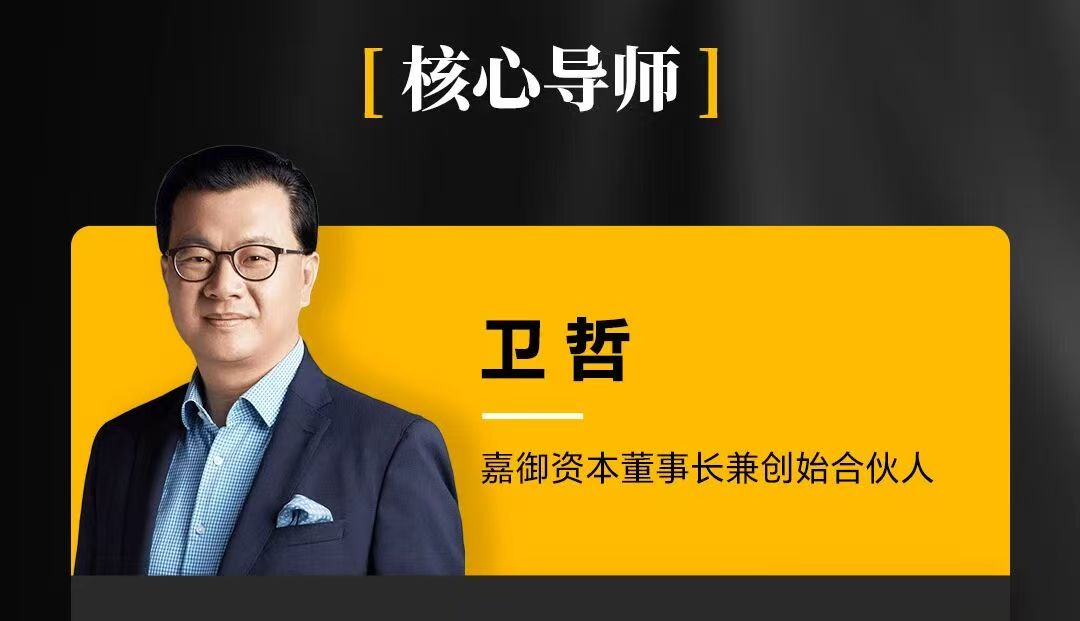
Why is Wei Zhe's course essential for all CEOs?
Because in China, it's hard to find another leader like him who has personally won billion-level battles across three entirely different fronts: 'global retail, Chinese internet, and top-tier investment.' He once pulled the Fortune 500 company B&Q out of the mire, led tens of thousands of troops to elevate Alibaba to legendary status, and now, as founder of Jiawei Capital, he deeply empowers new-generation global benchmarks like Anker Innovation and Pop Mart. In the sharpest manner, he will condense his 30 years of cycle-transcending decision-making wisdom into a practical 'CEO Decision-Making Operating System' you can use immediately.
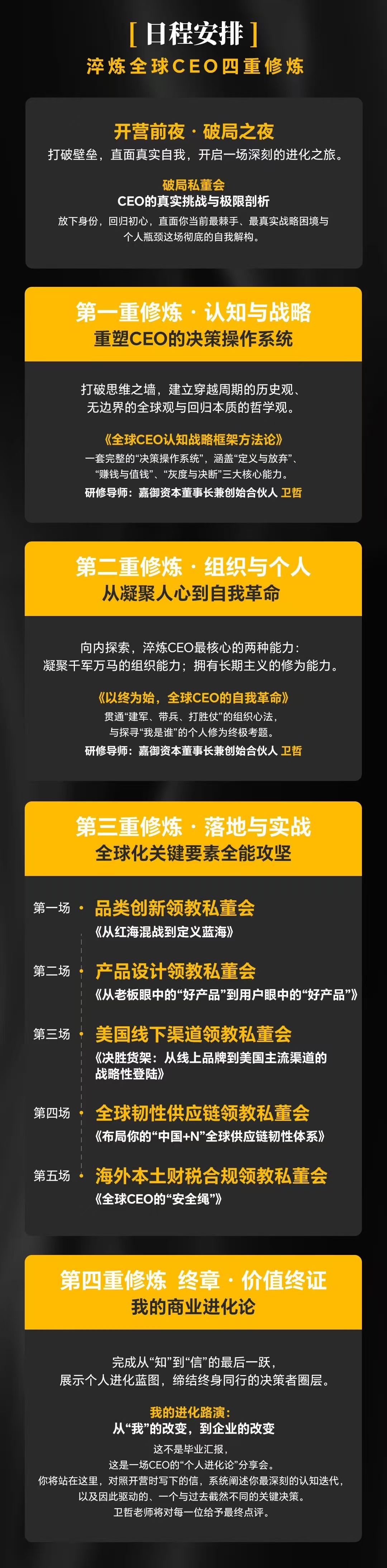
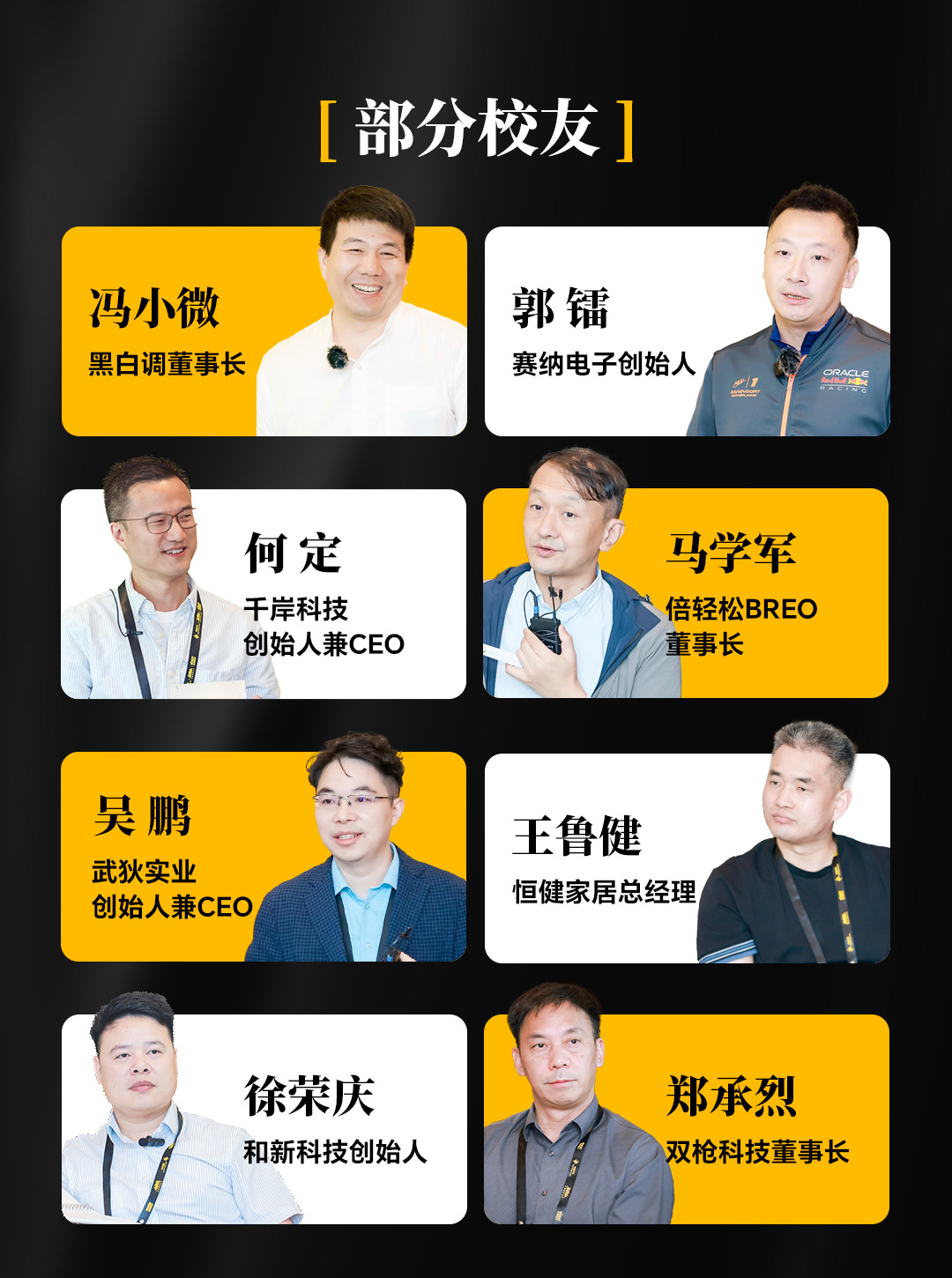
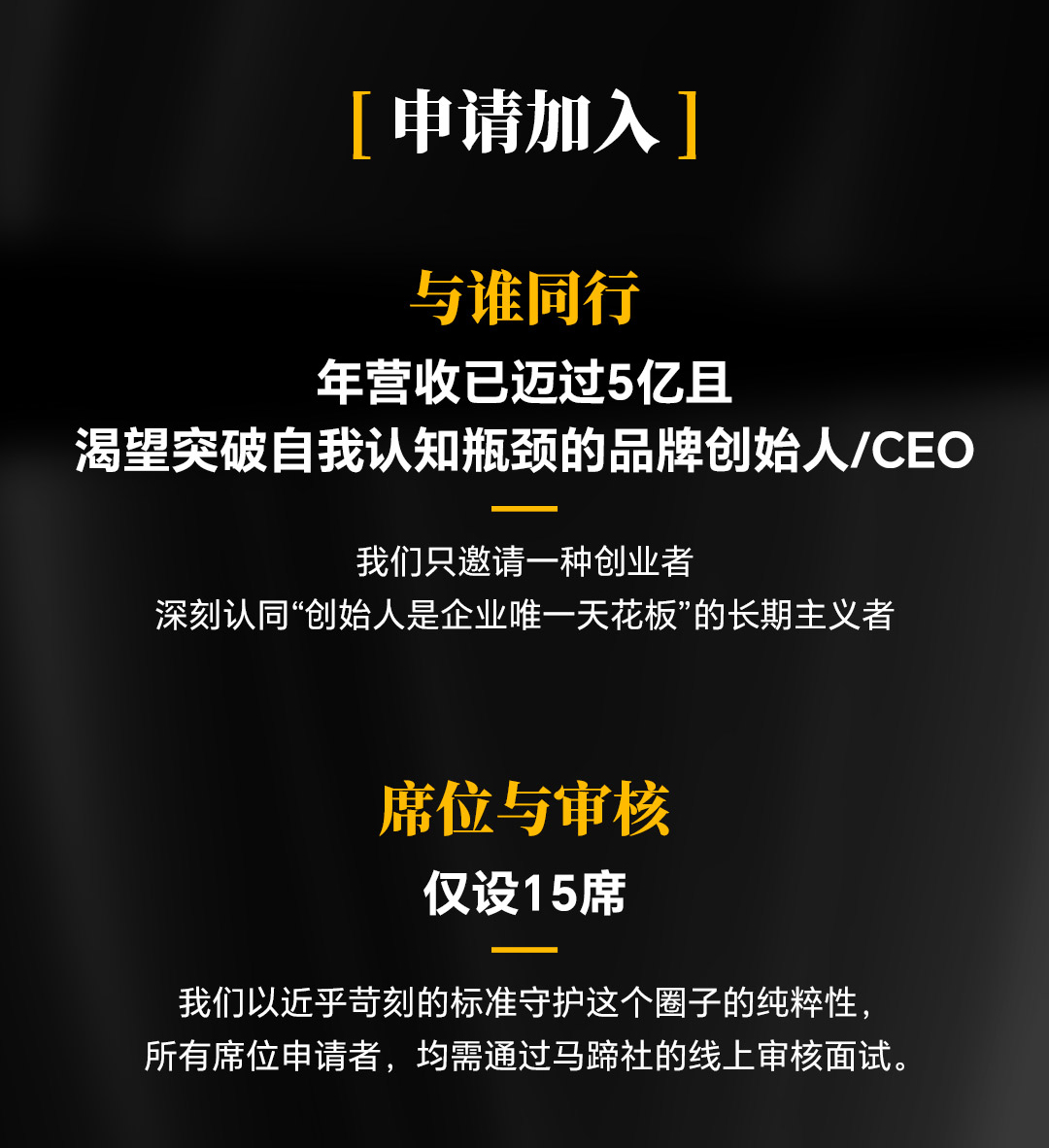
To meet Wei Zhe, inquire and register through Mati Club.
Registration details:

[Copyright Notice] Ebrun advocates respecting and protecting intellectual property rights. Without permission, no one is allowed to copy, reproduce, or use the content of this website in any other way. If any copyright issues are found in the articles on this website, please provide copyright questions, identification, proof of copyright, contact information, etc. and send an email to run@ebrun.com. We will communicate and handle it in a timely manner.
Translated by AI. Feedback: run@ebrun.com