
Spring Festival Cross-Border Hot Products List: From 'Malfoy Couplets' to 'Crying Horse' - Is Cultural Export the Real Opportunity?
By Wang Haoran, Edited by He Yang
[Ebrun Original] This year's Spring Festival excitement began with a 'Malfoy' couplet.
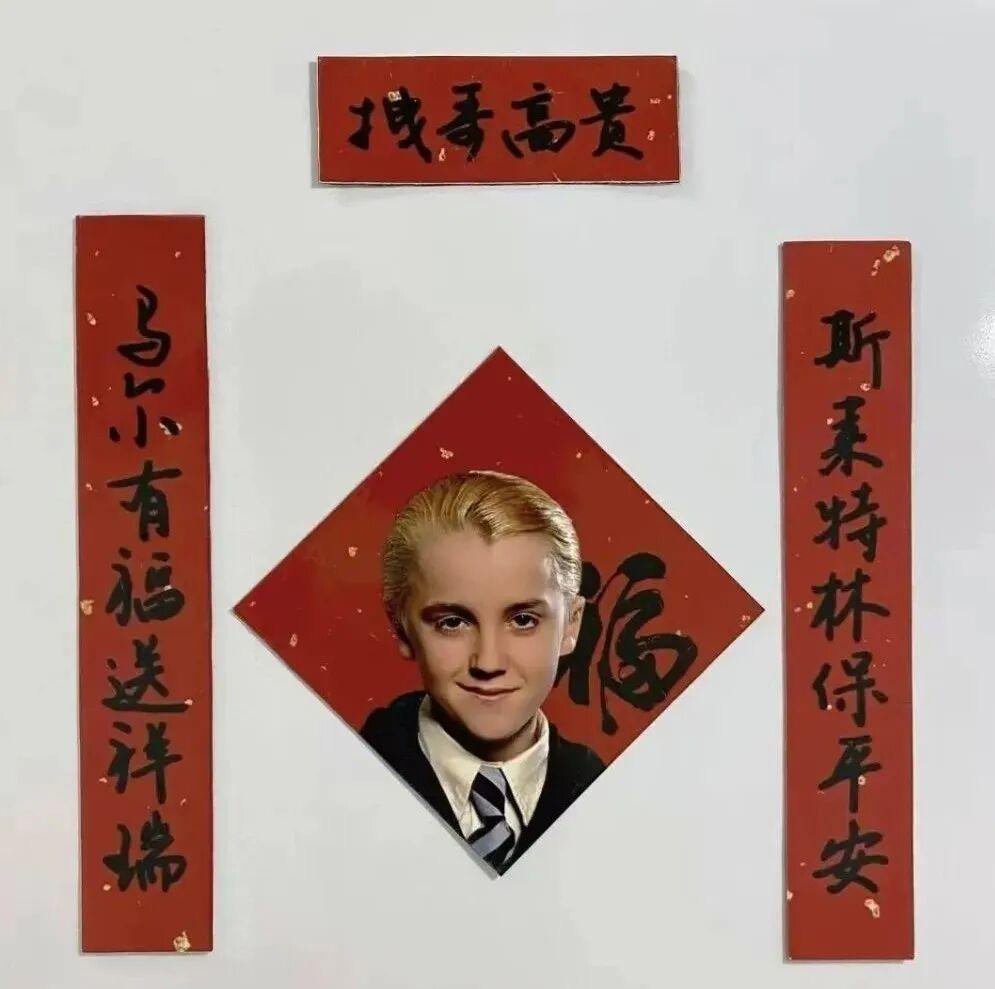
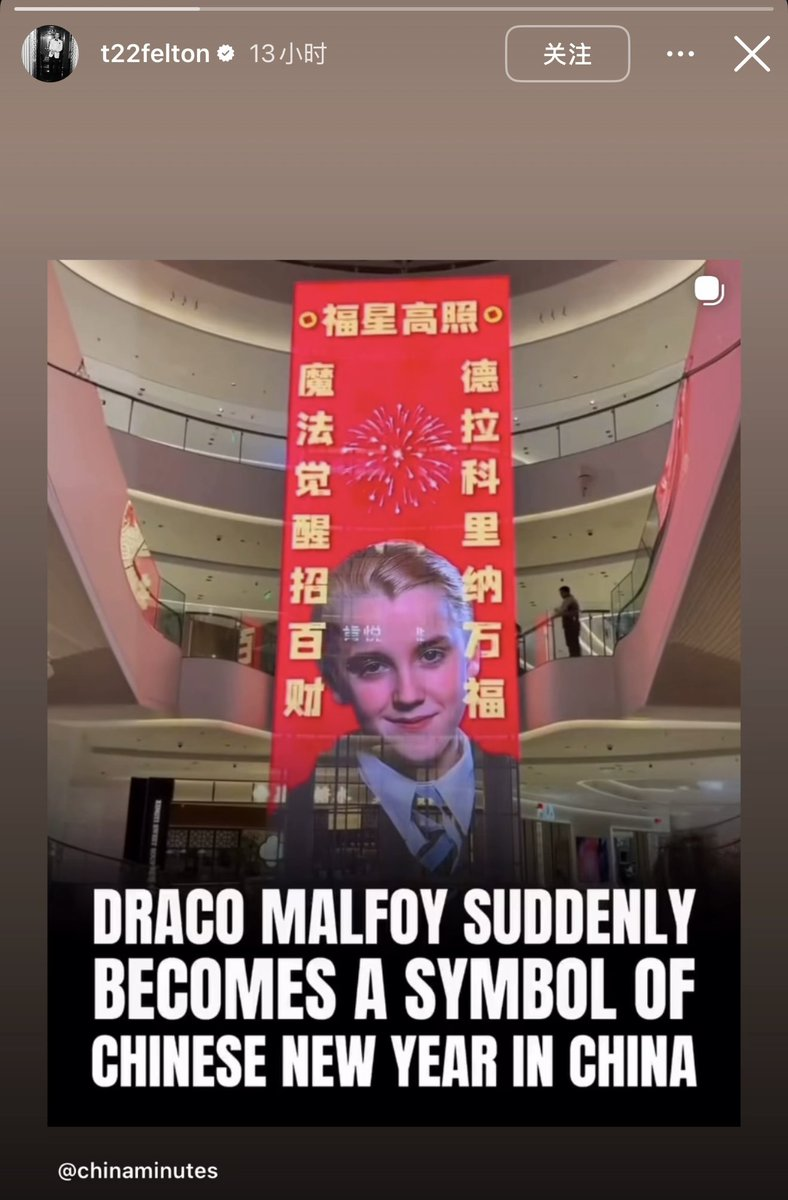
Not long ago, Draco Malfoy, a character from the Harry Potter series, unexpectedly went viral on Chinese social media. Because his name coincidentally contains the characters 'Ma' (horse) and 'Fu' (fortune), it was endowed with a festive New Year meaning. Netizens played on the homophone, putting his image on couplets, red envelopes, and 'Fu' character posters, making him the most unexpected mascot at the beginning of the Year of the Horse. Searching on e-commerce platforms, you can still find fridge magnets, couplets, and Fu character decorations printed with Malfoy's image.
Even the actor who played Malfoy reposted a giant poster hanging in a shopping mall on his Instagram.
Every Spring Festival, traditional cultural elements with New Year flavor always spark a wave of enthusiasm on overseas social platforms. Whether it's writing couplets, making dumplings, lion dances, dragon dances, or setting off fireworks, videos related to the Spring Festival on TikTok can easily garner millions of views. The bright red color, intense drumbeats, and leaping lion heads have become visual symbols for many overseas users to understand 'Chinese New Year,' gradually moving this festival from the Chinese community into the broader public view.
Official data shows that this year, China Media Group broadcasted and reported on the Spring Festival Gala to the world through its external communication platforms in 85 languages. CGTN's Spring Festival Gala-related reports achieved a global readership of 2.309 billion, with video views reaching 843 million, increases of 32.85% and 43.61% respectively compared to last year. The Group coordinated with nearly 4,000 media outlets worldwide for simultaneous live broadcasts and coverage of the Gala, a year-on-year increase of 37.95%. Public large screens in 4062 locations across 140 cities in 98 countries broadcasted and promoted the Gala, with the number of countries and screens covered increasing by 12.6% and 15.8% respectively compared to last year.
Goods bearing festive symbols and traditional cultural elements also experience a concentrated surge on cross-border e-commerce platforms. On platforms like Amazon and Temu, festive items such as red envelopes, couplets, window flowers, and Chinese knots are densely listed, with many single products selling tens of thousands of units within a month. During the New Year shopping festival, overseas transaction volume on Taobao increased by over 40% year-on-year, especially in Southeast Asian markets with large Chinese populations, where festive consumption demand was particularly concentrated.
Meanwhile, the Spring Festival is also a peak marketing period for major cross-border e-commerce platforms. Platforms represented by TikTok and Shopee have launched themed activities like 'Spring Festival Non-Stop Business,' pushing a batch of products with traditional Chinese cultural characteristics to a wider overseas market.
The 'New Year atmosphere,' once lamented as fading in China, has found new fertile ground overseas.
01 More Than Just the 'Crying Horse': A Wave of Spring Festival-Themed Products Goes Abroad
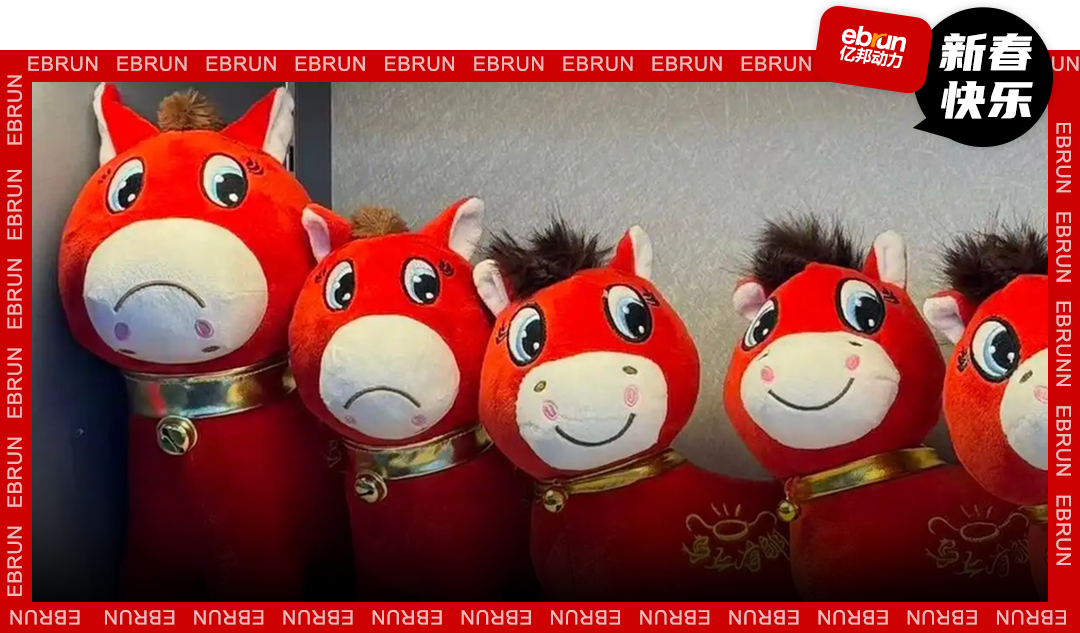
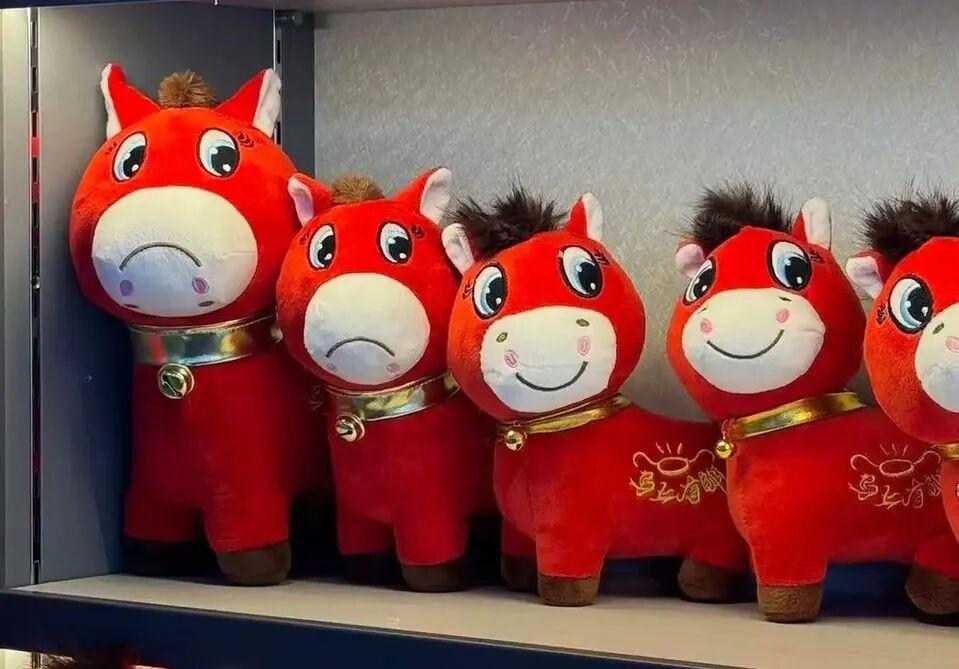
Earlier this year, a plush toy from Yiwu called the 'Crying Horse' unexpectedly became popular overseas. Its original design was meant to have a happy expression, but due to a sewing error that reversed the mouth stitch, it ended up with a sad, frowning face. This 'mistake' became its selling point. On social media, many young people interpreted it as a physical representation of 'workplace exhaustion,' allowing the little horse to quickly gain emotional resonance.
At the peak of its popularity, the factory producing the 'Crying Horse' received daily orders of up to 20,000 units. Some factories reported that foreign trade orders were scheduled until March, with a continuous stream of foreign merchants inquiring. In the Yiwu Trade City, overseas buyers could be seen taking photos with it.
Beyond emotional hits like the 'Crying Horse,' a batch of products with Spring Festival elements saw concentrated sales volume in overseas markets this year, especially in Southeast Asia, where festive peripherals experienced a significant sales spike.
Data from the '2026 Spring Festival Shopping Behavior Report' by Metric shows that in Vietnam, in the 6 weeks before the Spring Festival, TikTok Shop achieved sales of approximately 34.6 trillion VND, while Shopee sales reached 33.1 trillion VND. Before the festival, sales of 'Horse' themed products reached about 251.4 billion VND, with over 3.4 million items sold from more than 14,000 stores. Compared to the previous 6 weeks, sales value for this category increased by about 77%, and sales volume surged by 106%. Hot-selling categories focused on souvenirs, red envelope bags, festive decorations, and clothing printed with horse element patterns.
Statistics from another data platform, Kalodata, show a similar trend. In the Philippines station, a Horse Year gold foil lucky charm sold 165,500 units in 30 days, with a single-day peak GMV of 34,600 RMB. In the Vietnam station, a link for a variety pack of red envelope bags, launched just over a month ago, accumulated 73,500 orders, generating revenue of 5.38 million RMB.
Elements closely associated with the Spring Festival, such as Chinese knots and automatic mahjong tables, are also gradually moving from the Chinese community to a more diverse global user base.
Honghua Town in Tancheng County, Shandong, famous for its Chinese knot industry and known as the 'Hometown of Chinese Knot Art,' is a major production and export base for Chinese knot products, hosting 88 medium and large Chinese knot manufacturers and over 300 e-commerce companies. The traditional Chinese knots and related handmade decorative products produced here are exported in large quantities to Southeast Asia, the United States, the United Kingdom, Japan, and other countries. It is reported that the annual output value of Chinese knot products exported from Honghua Town reaches 1.8 billion RMB.
Mahjong tables were introduced to the United States over a hundred years ago and have gained popularity on Western social media as a cultural and social game, especially content related to mahjong on platforms like TikTok attracting many young users. In the US, in markets like New York and California, there are specialized e-commerce channels and physical stores selling electric mahjong tables; a large number of automatic or foldable mahjong tables can also be seen on Amazon.
Reports indicate that many mahjong enthusiasts in the US bring their own tiles and game mats, and the emergence of mahjong social clubs, themed events, and gatherings in the US and elsewhere has driven consumption of mahjong tables and accessories. For example, mahjong bags and storage cases can sell for $50; mahjong mats can sell for $80; a complete set of mahjong tiles can cost over $100...
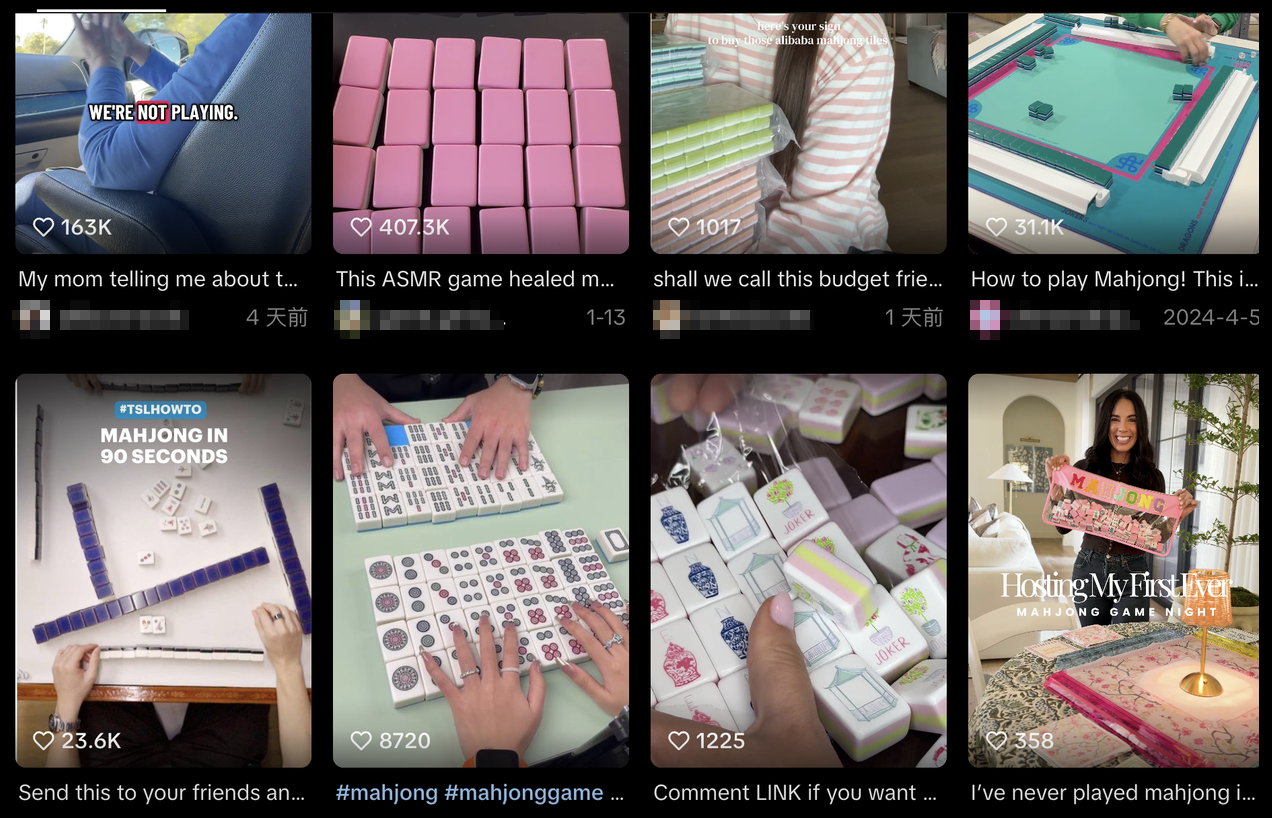
Mahjong has gained significant attention on TikTok.
02 'Becoming Chinese': Traditional Chinese Culture Finds New Ground
The warming of Spring Festival elements in overseas markets is not limited to festive goods. Alongside the spread of the festival, awareness of traditional Chinese culture itself is also rising, prompting some manufacturers to leverage the Spring Festival period to launch cultural and creative products with stronger cultural attributes. Relevant data shows that by 2024, the export value of Chinese cultural products (including intangible cultural heritage derivatives) had reached $135.1 billion, a 39% increase from 2020, indicating a continuous expansion in overseas demand for cultural goods.
Intangible cultural heritage (ICH) products are one of the categories with notable growth. The Miduoduo report points out that the current purchasing power for ICH products in overseas markets mainly comes from culture enthusiasts and design aesthetics groups, together accounting for over 60%. Regionally, mature markets in Europe and America contribute about 60% of the share, forming the base of overseas consumption, followed by emerging Asian markets, which are the source of growth.
From a category structure perspective, ICH-related goods can be roughly divided into several types: The first is arts and crafts, such as embroidery, ceramics, bamboo weaving, straw weaving, lacquerware, and paper-cutting. Taking Dehua ceramics as an example, the industry scale exceeded 60 billion RMB in 2024, with over 60% of products exported to more than 190 countries and regions worldwide. The second category includes the Four Treasures of the Study, traditional clothing elements (like Miao embroidery, Yun brocade), and traditional toys (like kites, shadow puppets). The third category consists of lifestyle-related products like tea ceremony items and traditional brewing products.
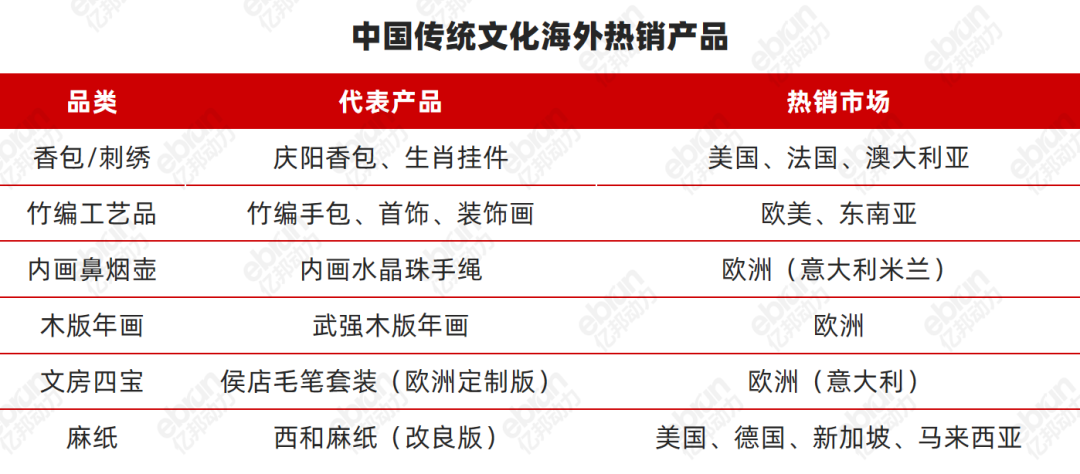
The cross-border B2B platform DHgate, in a recently released product selection guide, specifically mentioned that traditional Chinese cultural elements can be cleverly integrated into products to enhance recognition and appeal in overseas markets.
For example, the images of mythical beasts from the 'Classic of Mountains and Seas,' such as the Qilin and Bai Ze, possess strong visual symbols and story backgrounds, making them suitable for application in categories like trendy toys, models, digital accessories, and home decor. DHgate also previously hosted a themed livestream around 'Digital Shan Hai Jing,' combining traditional text with digital content to explore the integration of content e-commerce and cultural IPs.
For more mainstream aesthetic elements, classic Chinese style symbols like blue and white porcelain, the Four Gentlemen (plum, orchid, bamboo, chrysanthemum), and koi fish have been extended to products like handbags, ceramic tea sets, and silk accessories. Meanwhile, visual languages formed around cultural landmarks like the Palace Museum, the Great Wall, and the Potala Palace have also become important sources for brands developing co-branded and cultural creative products. For example, the high-end phone case brand CASETiFY launched a collaboration series related to the Palace Museum, transforming traditional palace patterns into design elements for modern digital accessories.
Driven by traditional culture, many merchants are also pushing more ICH products overseas. For instance, the Dongguan-based cultural brand 'PinKu,' inspired by the classic Eastern Han bronze 'Galloping Horse Treading on a Flying Swallow,' launched the 'Galloping Horse Treading on a Flying Swallow ? Auspicious New Year Lamp' for the Year of the Horse.
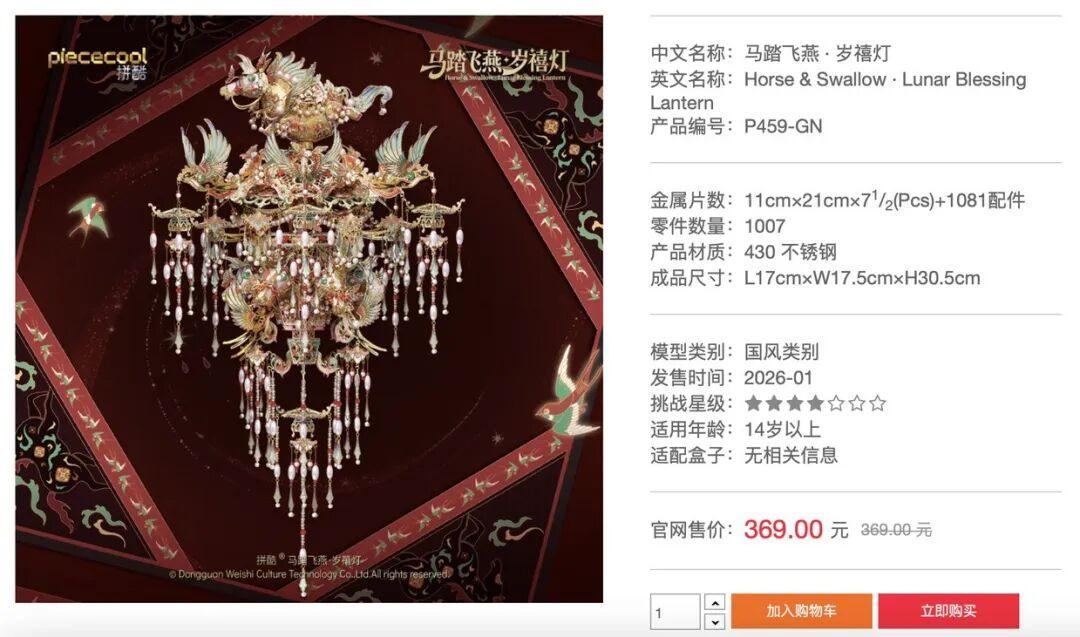
Galloping Horse Treading on a Flying Swallow ? Auspicious New Year Lamp
As traditional cultural products go overseas, related lifestyle concepts are also being accepted by more overseas users. Over the past year, 'Becoming Chinese' became a popular hashtag on TikTok. Health-preserving practices like drinking herbal tea, practicing Ba Duan Jin (a form of qigong), and foot soaking were repeatedly demonstrated by many bloggers, forming sustained dissemination on the platform.
For example, within TikTok's 'bathtime' related content, some bloggers specifically set up bathtub scenes, adding Traditional Chinese Medicine health-preserving bath packets for sharing; in hot and humid regions like Southeast Asia, sellers have also launched bath products combining local herbal remedies. Some skincare bloggers have taken a liking to gua sha, which is gradually becoming a hot topic of discussion. A gua sha board from the TCM beauty brand LANSHIN, priced at over $100, still achieves stable and considerable sales.
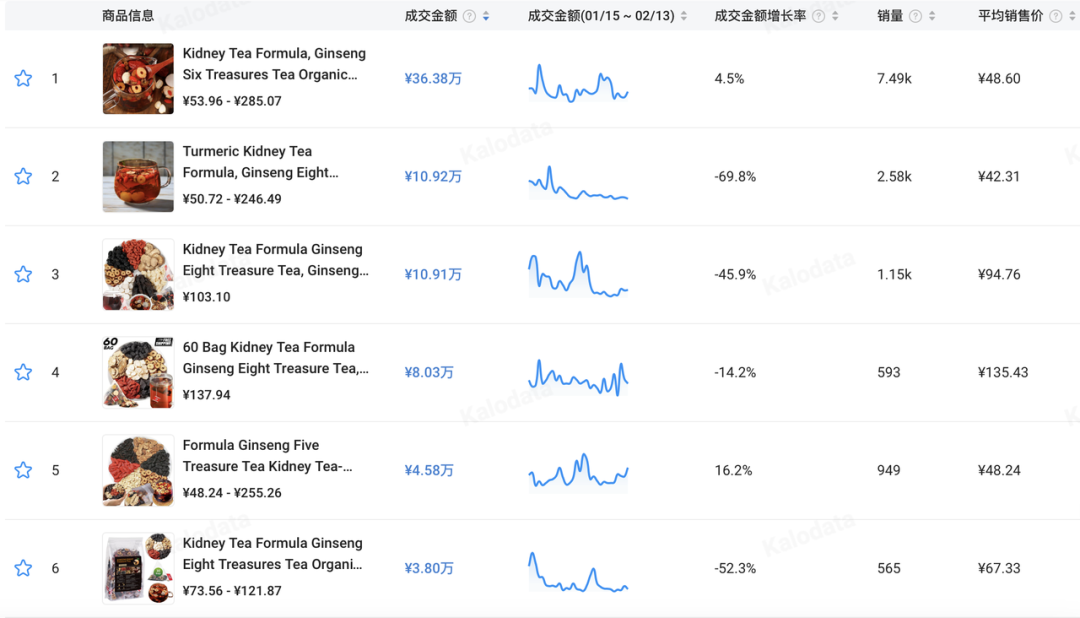
Herbal tea also has a certain audience in the US market. Kalodata data shows that in the past 30 days, several ginseng tea products on TikTok Shop US achieved sales of tens of thousands of RMB, with the highest-selling product selling over 7,000 units and generating 363,800 RMB in sales.
03 Overseas Local Brands Incorporate Spring Festival Elements for Marketing
Against the backdrop of rising traditional Chinese culture, some overseas local brands have also begun actively drawing on related elements, integrating them into new product designs.
For example, in early January this year, LEGO launched a Spring Festival themed series of products, including a horse racing canvas made of 1,650 pieces depicting four galloping horses; it also launched a Spring Festival firecracker decoration model, containing 8 firecracker components, echoing festive meanings like 'Fortune,' 'Welcoming the God of Wealth,' and 'New Year Celebration.'
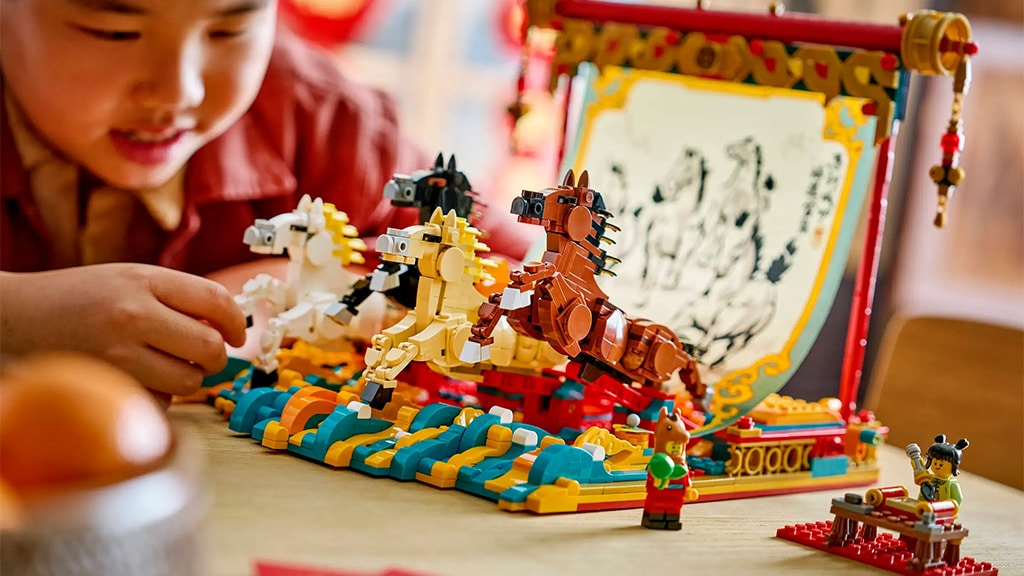
LEGO's Horse Year brick series launched this year.
Nike has also consistently released limited editions related to Chinese New Year in recent years, often featuring traditional colors like red and gold paired with zodiac animal patterns and festive symbols. These products are not only released in the Chinese market but also launched simultaneously in global Nike stores and the SNKRS App. In 2024, Nike released the 'Year of the Dragon' series, drawing inspiration from elements like dragon patterns, claws, and scales, integrating traditional dragon symbolism into shoe uppers and logos; its Jordan brand also launched the 'Soaring Dragon Ushers in the New' series, combining images of dragons and phoenixes in product patterns. In 2025, Nike continued to release several Snake Year themed Air Jordan sneakers and apparel accessories.
This year, Nike released multiple new products including the Dunk Low, Air Force 1 Low, P-6000, LD-1000, and the Horse Year themed Field General, incorporating traditional Chinese lantern elements into the product visual background to enhance the festive atmosphere.
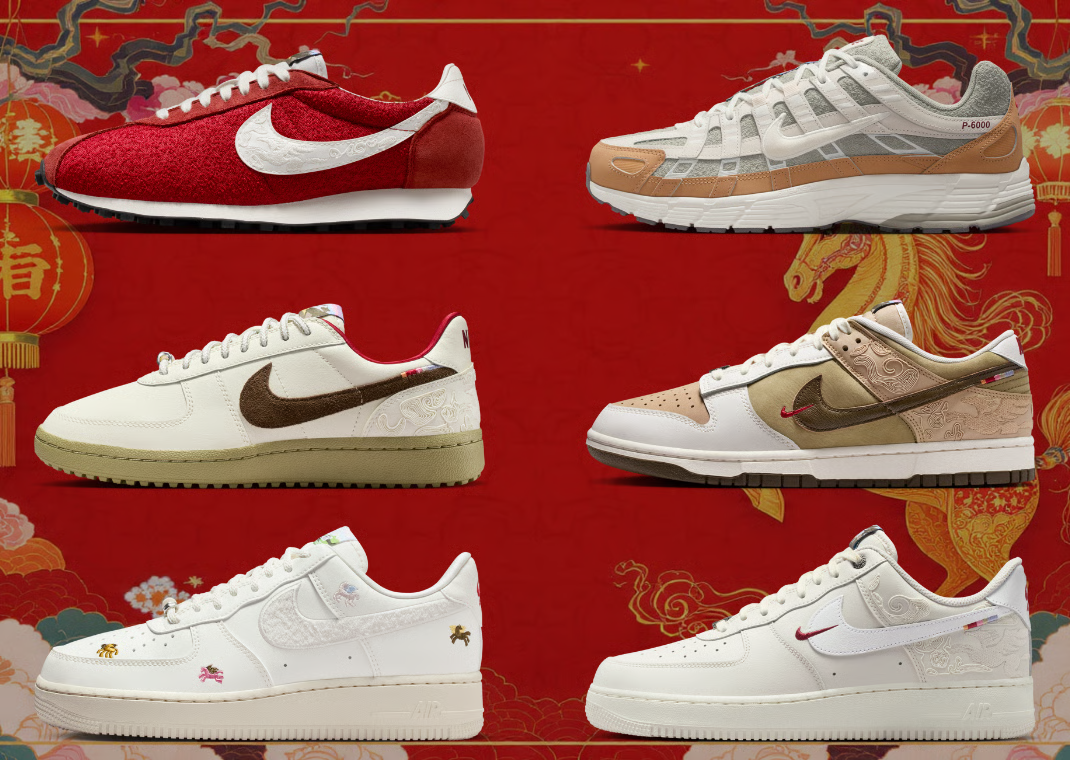
Nike's 2026 New Year series.
The French cookware brand Staub launched a cast iron pot with a Horse Year pattern, adding zodiac-themed designs to its classic French cast iron cookware, with a horse-shaped decorative knob on the lid, combining traditional craftsmanship with festive elements.
The American insulated cup brand Stanley also launched a 2026 'Year of the Horse' limited edition insulated cup, integrating the horse zodiac element into the design, using red as the main color and combining it with an image of a galloping horse, echoing symbols of auspiciousness and vitality.
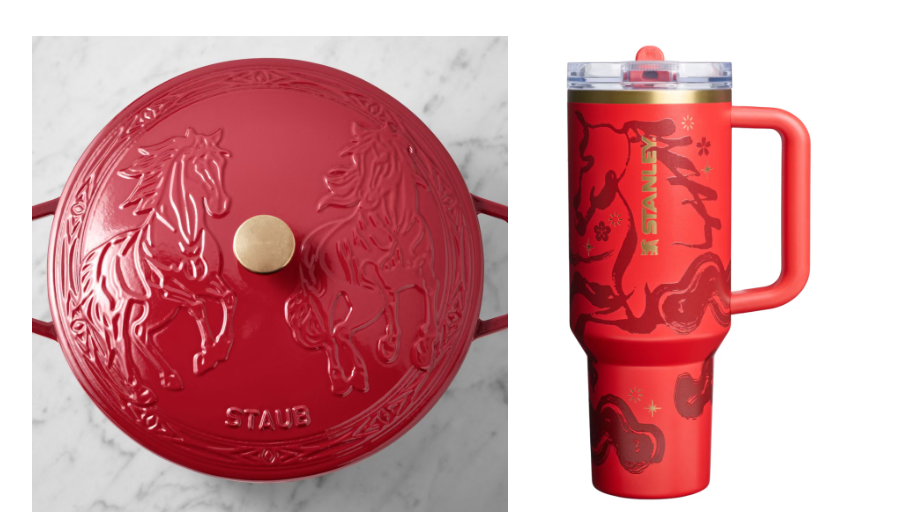
Image: French cookware brand Staub's Horse Year pattern cast iron pot (left)
American insulated cup brand Stanley's 'Year of the Horse' limited edition insulated cup (right)
It can be seen that from toys and sneakers to daily utensils, Chinese zodiac signs and festive symbols are being incorporated into the global product systems of more and more international brands. They serve both the Chinese consumer market and become an important method for brands to expand cultural expression and festive marketing.
Ebrun will continue to track and report on this intelligence. To learn more information related to this article, please scan the QR code to follow the author's WeChat.

[Copyright Notice] Ebrun advocates respecting and protecting intellectual property rights. Without permission, no one is allowed to copy, reproduce, or use the content of this website in any other way. If any copyright issues are found in the articles on this website, please provide copyright questions, identification, proof of copyright, contact information, etc. and send an email to run@ebrun.com. We will communicate and handle it in a timely manner.
Translated by AI. Feedback: run@ebrun.com