
Google Executive Unveils Four Key AI Business Strategies for 2026: From Search to Agents – How to Approach Digital Advertising?
How is digital advertising and commerce transforming in the AI era, and how should industry leaders position themselves to win in 2026? Recently, Vidhya Srinivasan, Vice President and General Manager of Google Ads & Commerce, shared her annual industry outlook, detailing how her team is reimagining the commerce experience for the AI age. Vidhya Srinivasan highlighted that Google's digital advertising strategy for 2026 will focus on four key areas to make commerce smoother, more thoughtful, and more personalized:
First, converting influence into commercial outcomes on YouTube. In 2026, Google will build stronger connections between brands and creators, using AI to deeply understand content and audiences, and match brands in real-time with creator communities that love their products.
Second, integrating ads into the AI search experience to redefine search advertising. For example, Google is currently testing a new ad format that directly displays retailers offering relevant products, labeled as "Sponsored." Simultaneously, Google has introduced a new "Direct Offers" feature in AI Mode to help brands drive conversions without impacting regular pricing.
Third, launching the future of agentic commerce. In January 2026, building on the Agent Payments Protocol launched in 2025, Google introduced the Universal Commerce Protocol, providing a standard for how businesses connect with AI agents during the shopping process. Checkout powered by the Universal Commerce Protocol is now rolling out, allowing U.S. users to purchase directly from Etsy and Wayfair within Search's AI Mode and the Gemini app (with Shopify, Target, and Walmart coming soon).
Fourth, accelerating growth with Gemini 3. Gemini powers Google's advertising tools, and as the model advances, so do the advertising products. In 2026, Gemini-driven ad tools will deliver stronger growth through creative, performance, and tangible business outcomes. However, all of this is built on a foundation of "trust." Vidhya Srinivasan emphasized, "As we enable agents to act on behalf of consumers and businesses, our strict data privacy and security standards ensure this 'fast lane' remains safe."
Below is the full text of Vidhya Srinivasan's annual industry outlook:
Consumers have long faced a trade-off when shopping: prioritize speed but risk buying the wrong item, or spend hours researching to ensure they get it right.
Today, that trade-off is disappearing.
Consumers are constantly searching for information, browsing screens, watching streaming content, and shopping online—and now, AI proves that speed and certainty can coexist. For businesses and consumers, this represents new opportunities but also requires new ways of thinking.
In 2026, we are working to make commerce experiences smoother, more thoughtful, and more personalized, helping businesses earn consumer trust from the very beginning.
1. Turning Influence into Commercial Outcomes on YouTube
As the most-watched streaming platform in the U.S. for nearly three years, YouTube continues to drive discovery—whether people are watching #GRWM (Get Ready With Me) Shorts, listening to their favorite podcasts, or experiencing major moments like the Olympics. Creators on YouTube are among today's most trusted trendsetters, and the relationships they build with their audiences help consumers move faster from browsing to buying.
In 2026, we will strengthen connections between brands and creators. We have been actively exploring new ways for advertisers to connect with creators, and this year we will go further: using AI to deeply understand content and audiences, and matching brands in real-time with creator communities that love their products. This turns creators' native influence into tangible commercial results.
2. Reinventing Advertising for the New Era of Search
Search is no longer just about keywords—today, people increasingly use AI to spark inspiration, conduct visual searches with snapshots, or ask questions in more natural, conversational ways. In 2026, this evolution makes search an even more powerful discovery tool, where ads can provide both inspiration and answers. We are not just adding ads to the AI search experience; we are redefining what advertising is.
Take AI Mode, for example: it offers new opportunities for businesses to naturally integrate into user conversations. Over the past year, we have been testing new ad formats to better connect inspiration with action. Our research shows that AI Mode delivers a more helpful shopping experience when users can easily compare brands and stores.
AI Mode already surfaces native purchase suggestions based on query relevance. Now, we are testing a new ad format that directly displays retailers offering these products, clearly labeled as "Sponsored." This new format helps shoppers easily find convenient purchase options and gives retailers visibility at key consideration moments. Beyond retail (such as in travel), we are testing similar formats to help people discover relevant products and services.
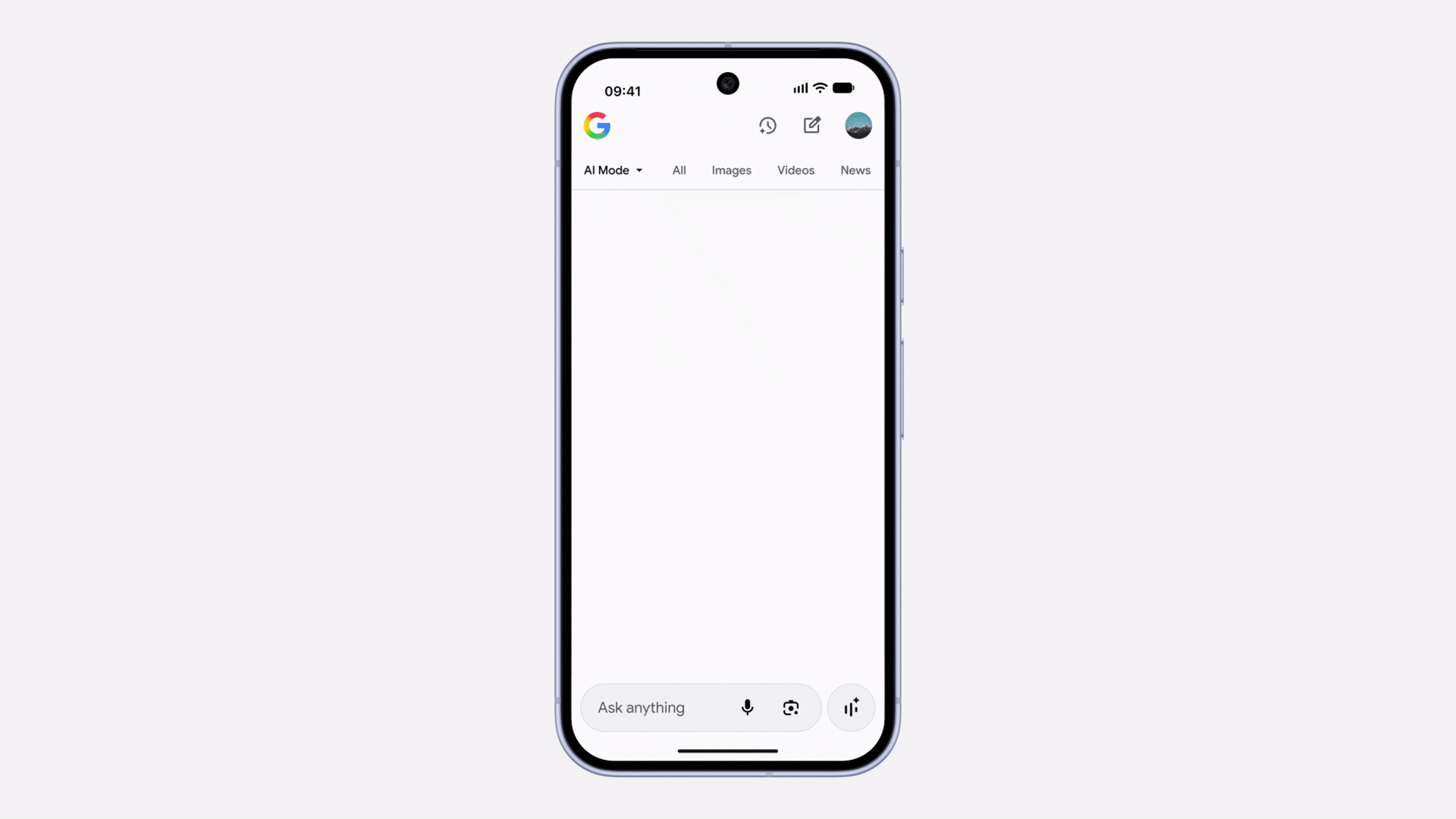
(Caption: User flow of the new shopping format in AI Mode: It appears below organic results and is labeled "Sponsored.")
We recently also launched the "Direct Offers" feature in AI Mode to help brands stand out at critical moments. With Direct Offers, businesses can provide tailored promotions to ready-to-buy shoppers, driving conversions without affecting regular pricing. In the future, we will expand this feature beyond pricing to include dimensions like membership benefits and product bundles.
3. Launching the Future of Agentic Commerce
In 2026, agentic commerce is no longer just a concept—it is a reality. It will reshape the entire shopping journey from discovery to decision-making, while helping brands differentiate themselves.
We have two goals:
1) Eliminate the tedious parts of shopping so consumers can focus on the enjoyable aspects; and
2) Work with industry partners to lay the necessary groundwork for seamless, secure agentic commerce.
To that end, we launched the Agent Payments Protocol (AP2) in 2025 and built upon it last month with the Universal Commerce Protocol (UCP). The UCP provides a standard for how businesses connect with AI agents during shopping, including enabling secure digital identity and payments. Within weeks of its launch, we received positive feedback from hundreds of top tech companies, payment partners, and retailers integrating with the UCP. It has already helped optimize the shopping experience on Google. In fact, checkout powered by the UCP is now rolling out, allowing U.S. users to purchase directly from Etsy and Wayfair within Search's AI Mode and the Gemini app (with Shopify, Target, and Walmart coming soon).
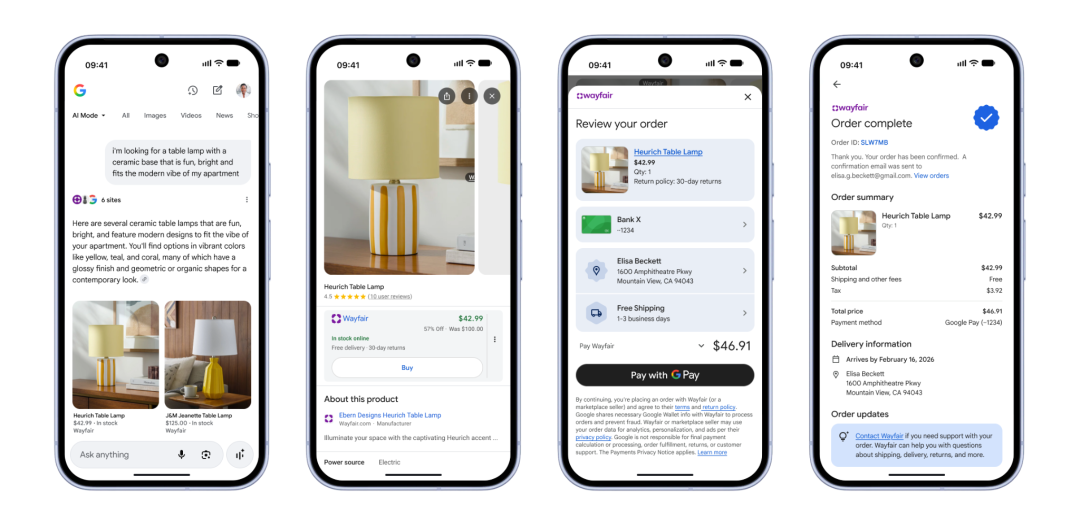
(Caption: Step-by-step illustration of a UCP-powered shopping flow: Users can discover and buy from Wayfair directly within AI Mode.)
The potential of the UCP extends far beyond retail. It is laying the foundation for all future commerce experiences—where every transaction will be seamless and agent-driven.
4. Accelerating Growth with Gemini 3
In this transformative period, businesses need tools that keep pace. Last year, we achieved in 12 months what would have taken a decade of innovation, culminating in the launch of our most intelligent model to date, Gemini 3. Gemini powers our advertising tools—as the model advances, our products improve, with no additional adjustments required from clients.
In 2026, Gemini-driven ad tools will deliver stronger growth through creative, performance, and tangible business outcomes.
Starting with creative: With tools like Nano Banana in Google Ads Asset Studio and now Veo 3, imagination can become reality. This makes AI a real-time creative partner for businesses, helping advertisers produce studio-quality work in minutes. Adoption of this technology is accelerating, demonstrating that generative media has become a scalable technology: In 2025, we saw a 3x increase in Gemini-generated assets created by advertisers, and in Q4 alone, nearly 70 million creative assets in AI Max and Performance Max campaigns were generated by Gemini.
But even the best creative is meaningless if it doesn’t appear at the right moment. AI-driven campaigns help advertisers adapt to evolving experiences. Building on existing campaigns, we launched AI Max last year to enhance performance and expand the reach of advertisers' search campaigns. It has already helped advertisers reach billions of additional new searches they couldn't access before.
The effectiveness of campaign tools depends on the data and measurement behind them. However, with fragmented data and varied solutions in the market, it's difficult for businesses to know what data they're missing and where to invest. That's why we are redesigning our measurement systems to provide advertisers with a one-stop solution, ensuring every decision drives real, measurable growth.
5. Built on a Foundation of Trust
None of this is possible without trust. Although the world is changing, our commitment to bold and responsible innovation remains constant.
That's why, in this intelligent, AI-first era, our principles are the same ones we've upheld for the past 25 years. As we empower agents to act on behalf of consumers and businesses, our strict data privacy and security standards ensure this 'fast lane' remains safe.
With this foundation, we can freely imagine the possibilities of this era of opportunity. Together, we can usher in a new age—where shopping becomes effortless, and the processes of discovery and decision-making are equally enjoyable.
[Copyright Notice] Ebrun advocates respecting and protecting intellectual property rights. Without permission, no one is allowed to copy, reproduce, or use the content of this website in any other way. If any copyright issues are found in the articles on this website, please provide copyright questions, identification, proof of copyright, contact information, etc. and send an email to run@ebrun.com. We will communicate and handle it in a timely manner.
Translated by AI. Feedback: run@ebrun.com